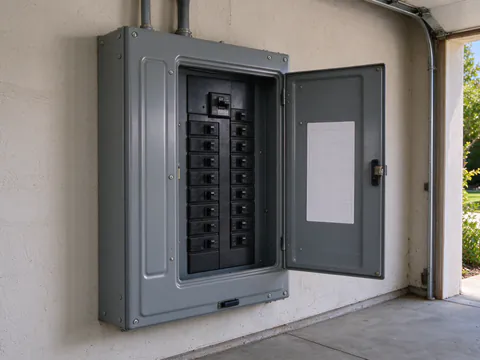
A 200-amp panel on a Silver Lake or Echo Park house does not show how much knob and tube is still connected behind it. LADBS permits in 90026 record panels that were upgraded while the remaining knob and tube was re-fed from new breakers, so the first question here is less often “is there knob and tube?” and more often “which circuits still run on it?” LA Knob and Tube handles knob and tube replacement in Silver Lake, Echo Park and Angelino Heights, plus the Elysian Valley streets that share ZIP code 90039, where hillside lots and small rental buildings add their own planning steps.
The permit record and the housing age both point to a lot of original wiring that has already been partly dealt with. LADBS issued 132 single-family rewire permits in 90026 between January 2020 and October 2026, second only to 90042 across the whole city, and the Census Bureau estimates that 46.4% of housing units there were built before 1940, among the highest shares in Los Angeles.
The highest rewire rate of any plan area
Permit counts can also be read as a share. Across the Silver Lake-Echo Park-Elysian Valley community plan area, 196 of the 4,819 electrical permits LADBS issued for one- and two-family dwellings in that window described a rewire. That works out to 40.7 per 1,000, the highest rate of any community plan area in the city. In 90026 alone it is 41.8.
A high rate means that when owners here pull an electrical permit, a rewire is more often the reason than in most of Los Angeles. It does not measure how many houses still contain knob and tube, and it leaves out unpermitted work entirely. What it does point to is a housing stock full of staged and partial jobs, where one owner replaced the kitchen circuits, a later one upgraded the service, and nobody replaced the bedrooms. Untangling that history is the core of a knob and tube inspection in this part of town.
Panels that re-fed the original circuits
LADBS permit descriptions in 90026 show a pattern buyers should know about. A 2021 permit reads “Upgrade main panel to 200 amps. Remove and re-feed remaining knob and tube.” A 2022 permit describes a service upgrade to 200 amps that rewired only “sections with knob and tube.” In both cases a modern panel went in and some original circuits stayed live, reconnected to new breakers.
Re-feeding can be a reasonable way to stage the work, but it produces a house that looks current at the panel while original conductors still serve some rooms. A new breaker can trip on overload; it cannot add a grounding conductor to a two-wire circuit, restore rubber insulation that has dried and cracked, or find a splice buried in a wall cavity. If a listing in Echo Park says the panel was upgraded, ask whether any circuits were re-fed and which ones. The panel upgrade vs rewiring guide explains why the two scopes are separate, and the active vs abandoned guide covers how live and dead runs are told apart without anyone touching them.
Duplexes and small rental buildings
Small multi-unit buildings are a large part of the older stock here. The Census Bureau counts about 2,431 rental units in 90026 in pre-1940 buildings of two to four units, alongside 3,674 owner-occupied single-family houses from the same era.
A rental changes the plan in a few concrete ways. Each unit is mapped on its own, because a duplex where the upstairs was remodeled and the downstairs was not is two different jobs under one roof. Where each unit has its own meter and panel, each panel is evaluated separately, and a shared house circuit (laundry, a garage, exterior lights) is traced to whichever panel actually feeds it. The work moves unit by unit and circuit by circuit, so the schedule names which rooms lose power on which days and the people living there can plan around it.
Paperwork differs too. The LADBS electrical permit application limits owner-builder permits to a single-family dwelling where the owner shows proof of ownership and current residence, so a rental duplex is permitted under the electrical contractor’s license. Note also that the LADBS rewire figures on this page cover one- and two-family dwellings only, so three- and four-unit buildings sit outside them. The partial replacement page explains how a building is split into phases, and the insurance guide covers the wiring questions a landlord’s carrier may raise.
Hillside lots and uneven crawlspaces
LADBS recorded 339 cripple-wall retrofit permits in 90026 and 270 in 90039 since January 2020. Cripple walls only exist under raised wood floors, so those permits confirm a lot of houses with crawlspaces. Where a house sits on a slope, the crawlspace rarely has one height. It can open to standing room at the downhill end and close to a few inches where the floor meets the hill, and some houses step down far enough to have a garage or a lower room under part of the main floor.
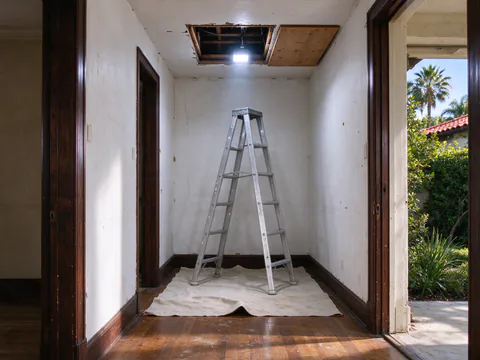
For the electrical work, that decides the route room by room. Under a tall section, first-floor outlets are fed from below through the floor plate, with openings at the boxes only. Over a tight section, the same circuits come down from the attic instead, which means longer fishes through plaster walls and more places where framing has to be crossed. Clearance is measured under each part of the house on the first visit, since it is one of the factors that moves cost the most. The plaster wall rewiring page covers how openings are chosen and patched, and living at home during rewiring covers what a staged job means day to day.
Angelino Heights and exterior service changes
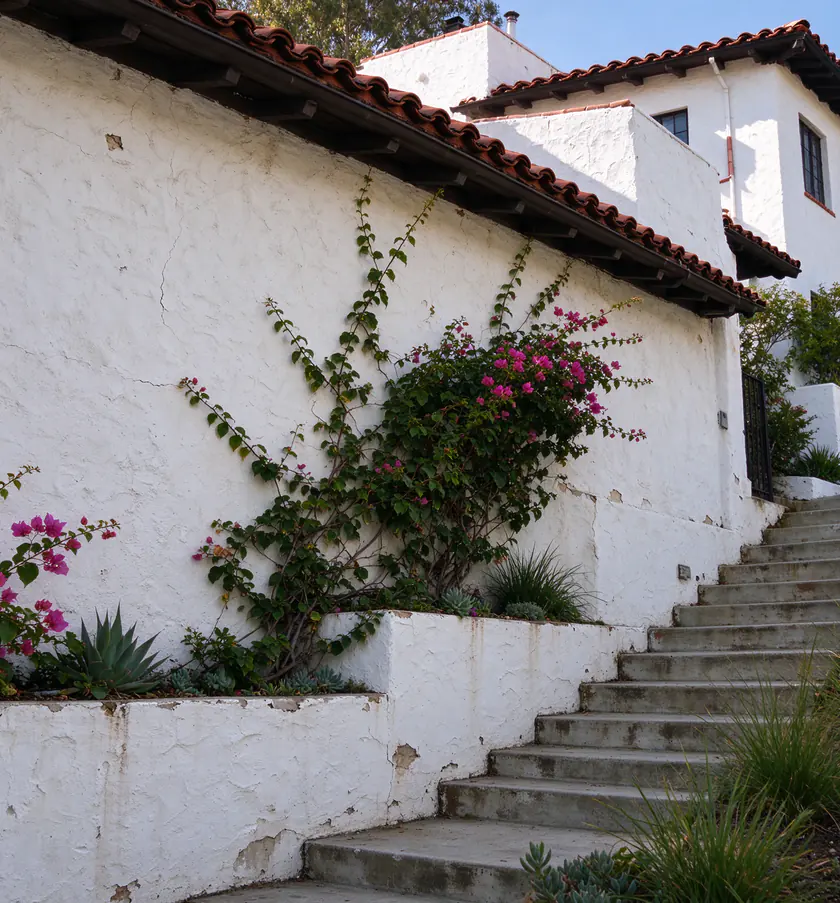
Angelino Heights has Victorian-era houses inside its own Historic Preservation Overlay Zone. City Planning materials state that interior work with no exterior change is exempt from HPOZ review, and each preservation plan lists its own exemptions, so the Angelino Heights plan is the document to check for a given address. Replacing wiring inside the walls normally sits on the exempt side.
The electrical service is where review can come in. A new mast, meter or panel on a Victorian facade is an exterior change, and most exterior changes in an HPOZ need a City Planning approval before work starts. When a rewire includes a service upgrade, the new equipment’s location is settled early, with the preservation plan and LADWP’s meter requirements both in view. LADWP verifies a meter location before a new meter panel goes in and needs the LADBS permit before its inspector visits. The historic homes guide covers approvals and the city’s Mills Act program.
Planning the work in Silver Lake and Echo Park
The first visit sorts every circuit into live, dead or mixed, checks the panel, and looks at attic and crawlspace access. In a house with a past panel swap or remodel, that circuit map matters more than anything else, because it shows where new wiring actually ends. Routes go through the attic and crawlspace first, with openings at boxes and where framing has to be crossed, and the quote lists every opening and who patches it. The work itself is carried out by licensed and insured electrical contractors.
Permits come from LADBS, which issues almost every house rewire permit as an express permit without plan check; inspections happen before walls close and again at the end. LADWP serves the whole area. The finished panel is labeled, and a partial job ends with a written list of the circuits still on original wiring, which an insurer, a buyer or the next phase will want. The rewiring permit guide and quote checklist cover the paperwork, and the cost estimator gives a first budget.
ZIP code 90039 also covers Atwater Village, which has its own page under Los Feliz and Atwater Village. East of the hills, Highland Park and Mount Washington has the same mix of slopes and raised floors, and across the river Lincoln Heights and El Sereno has its own concentration of pre-1940 houses.