LA Knob and Tube handles electrical panel upgrades in Los Angeles, Pasadena, Glendale and South Pasadena, as part of rewiring older houses: replacing fuse boxes and undersized panels, sizing the new one for the circuits the house will need, and coordinating with the utility. The work is carried out by licensed and insured electrical contractors. A panel upgrade can be the first electrical job an older house gets, because a fuse box or a full panel stands in the way of almost everything else.
It is also a job easily mistaken for something it is not. A new panel changes the equipment at the start of every circuit. It does not change the circuits. If knob and tube fed the bedrooms before the upgrade, it feeds them after, now on new breakers.
What happens on the first visit
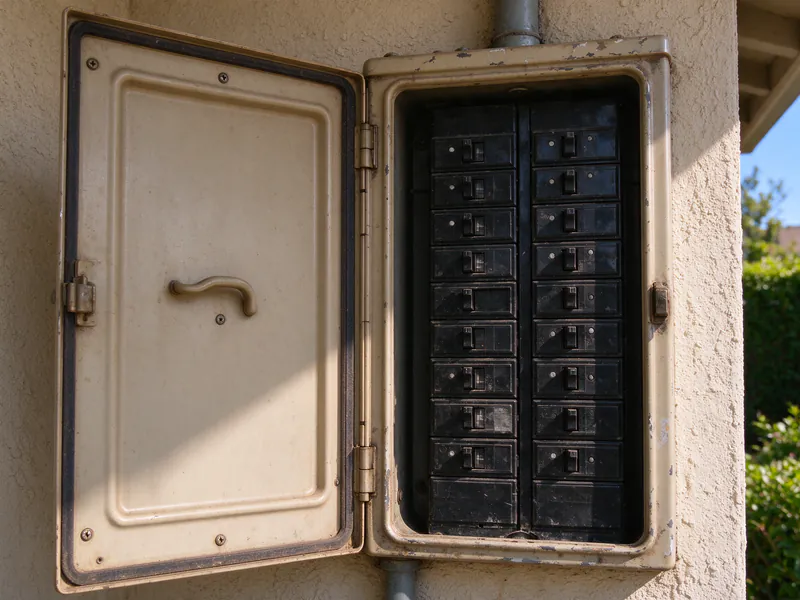
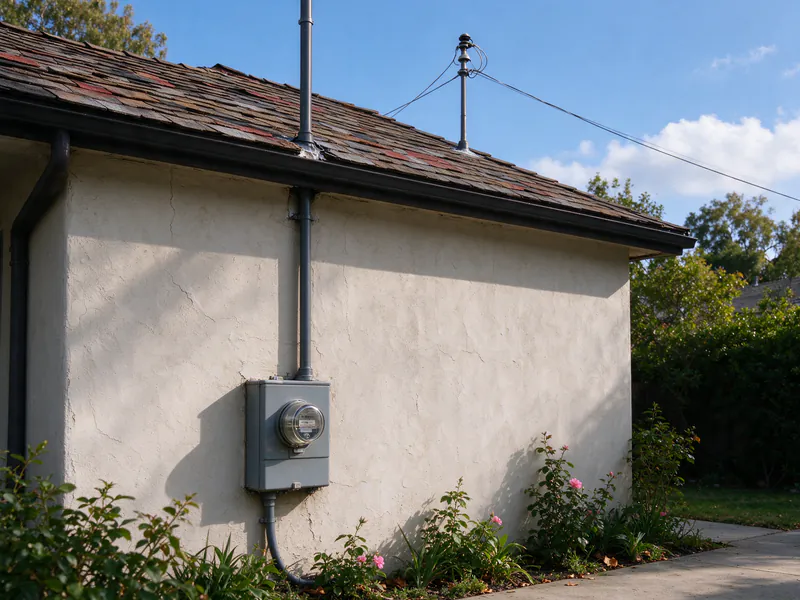
The first visit starts with a panel inspection: the make and condition of the panel or fuse box, the service size, how many spaces are in use and free, and how each circuit is protected. A fuse or breaker larger than its wire can carry is noted, because the new panel will be sized to the wiring, not to the old fuse. The meter, mast and service drop are checked outside, along with where a new panel could go.
The visit also maps live, dead and mixed circuits, as the guide to active and abandoned knob and tube describes, because the panel decision depends on what the circuits will be after any rewiring. That is where the load calculation comes in.
Panel and branch wiring are separate scopes
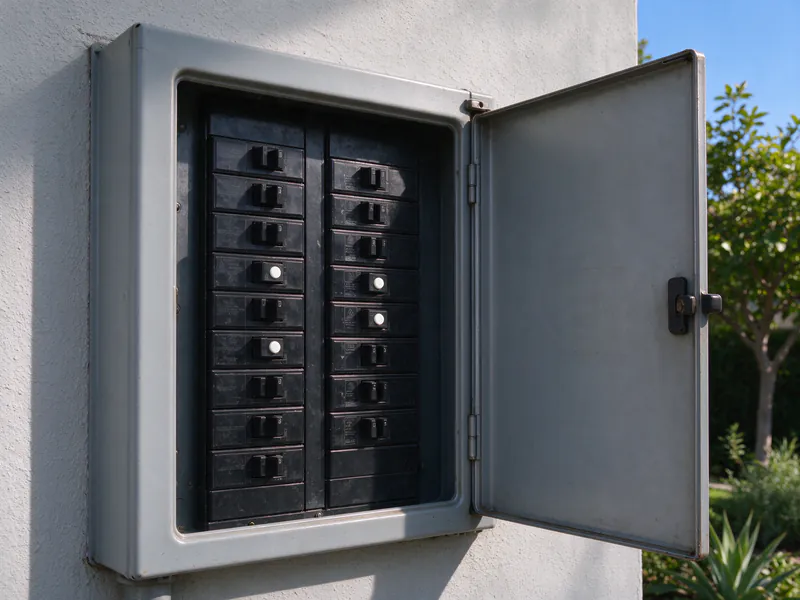
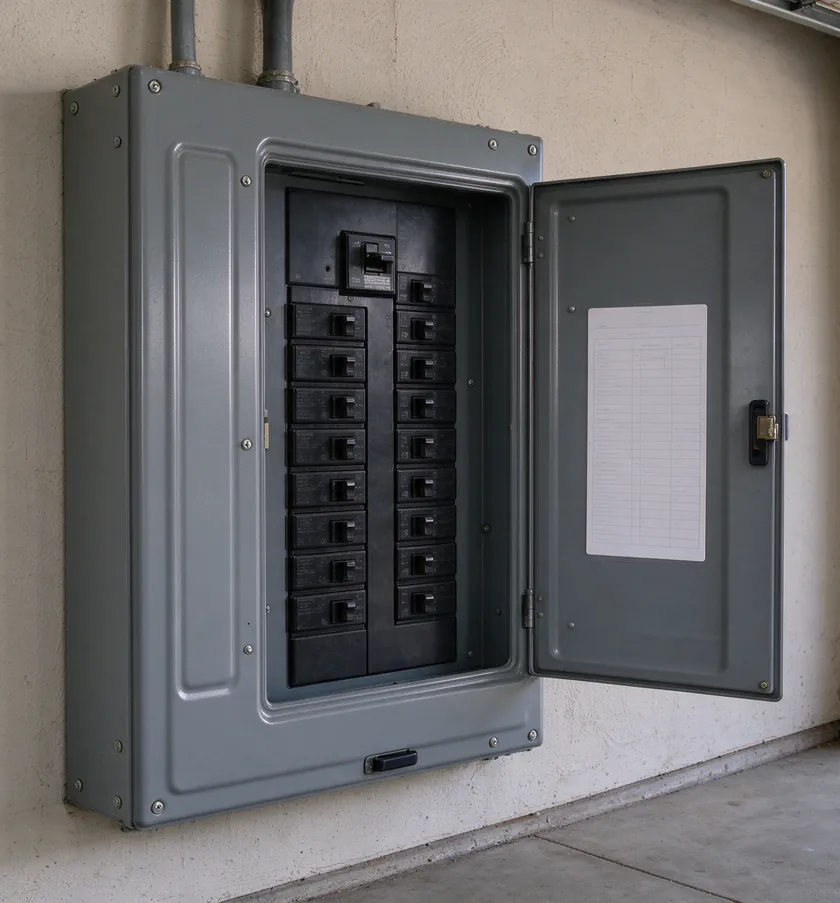
The two parts of the system are easy to confuse. The panel, or panelboard, holds the breakers or fuses that protect each branch circuit. Branch wiring is everything from there to the outlets, switches and lights. A panel upgrade replaces the first. Rewiring replaces the second. LADBS permit descriptions show both kinds of job, for example “upgrade electrical panel from 90 amp knob and tube to 200 amp” in 90004, and “Service upgrade to 200 and rewire sections with knob and tube” in 90026. The second one is a panel upgrade plus part of a rewire; the first, as worded, changes the panel only.
That matters for insurance and for buyers. A house with a new 200-amp panel and live knob and tube is still a house with live knob and tube. The panel upgrade vs rewiring guide explains when each is needed, and whole-house rewiring covers replacing the circuits.
Fuse panels and old protection
A pre-war house that has never had a panel upgrade may still run on screw-in fuses or fused pull-outs. Fuses do protect circuits, but they invite one dangerous habit: replacing a fuse that keeps blowing with a larger one. That lets the wire carry more current than it was built for, and it overheats before anything trips. Never change a fuse to a larger size. When a fuse panel is replaced, each old circuit gets a breaker sized to its conductors. A circuit that kept blowing a fuse will now trip its breaker for the same reason, which is a sign it needs more circuits, not a bigger breaker.
Load calculation: 100 amps to 200 amps
A house built for a few lights and a radio may still be fed by a small service. A Lawrence Berkeley National Laboratory and UCLA study of California single-family homes found 200-amp service most common and 100-amp next, with smaller, older homes more likely to have 100 amps or less. Whether a given house needs more comes from a load calculation, done the way the electrical code sets out: lighting and receptacle load by floor area, kitchen and laundry circuits, and each fixed appliance, such as a range, dryer, water heater, air conditioning or heat pump and an EV charger.
That calculation answers the capacity question honestly, and the assessment tool is a quick way to sort out what to ask about first. Some houses can stay at 100 amps with a new panel that has more spaces. Others, especially those adding electric appliances, need a 200-amp service. Choosing the size before the rewire avoids a second upgrade later. Where the attic is due for insulation too, the attic insulation page covers how that fits the same plan.
The utility side: LADWP, Pasadena, Glendale and South Pasadena
In the City of Los Angeles, the utility is LADWP. If the job includes a new meter panel, LADWP asks that the meter spot be verified with its electric service staff before the panel is installed; single-family meter spots up to 320 amps can be requested online. LADWP needs to see the LADBS electrical permit before its inspector visits, and says the meter set generally follows within about ten working days when no other LADWP work is needed. Underground services take longer, with cost estimates that LADWP says take six to eight weeks. LADWP generally charges no installation fee when its existing service can carry the new demand.
Pasadena and Glendale run their own municipal utilities, so the process is different. Pasadena Water & Power publishes fixed charges for new services: $1,238.19 for a 200-amp overhead service, and $3,190.81 plus civil construction for an underground one. Glendale Water & Power’s residential service-upgrade requirements are confirmed per address. South Pasadena is served by Southern California Edison. The permit guide covers how the city permit and the utility steps fit together.
Mast placement in HPOZs and historic districts
Interior rewiring inside an LA Historic Preservation Overlay Zone does not need preservation review, but a panel upgrade can change the outside of the house. The Highland Park-Garvanza preservation plan, for example, says electrical masts, headers and fuse boxes should be placed at the rear of a structure where possible, and that utilities should go underground where feasible. The city has 35 adopted HPOZs, and each plan has its own exemptions and guidelines. Pasadena and Glendale designate their own historic districts, and their review rules are confirmed per address. If a new meter or mast would land on a street-facing wall, the location is settled before the permit. The historic homes guide covers HPOZ review in more detail.
Planning a rewire and a panel?
Size the panel from the circuit plan, so it is done once and lands where the utility and the HPOZ allow.
Permits and inspection
A panel upgrade is permitted work. In the City of LA, LADBS issues the electrical permit, and a single-family house needs electrical plan check only if a listed trigger applies, such as equipment of 600 amps or more or a new connected load above 400 amps, so a typical 200-amp upgrade does not. LADBS publishes an online fee calculator for the permit. In Pasadena, the city’s fee schedule lists a $78 processing fee, $21 per breaker and $73 for a service or panel up to 200 amps. Glendale and South Pasadena permit through their own building departments.
Access and restoration
Replacing a panel in the same spot usually needs little or no wall work. Moving it is different. A new location means extending the existing circuits to it, which can mean openings in plaster near the old and new panels, and a recessed panel set into a plaster wall needs the wall cut and patched around it. The quote should name each opening and who patches it. When the panel work comes with a rewire, the plaster wall rewiring page covers how openings are handled.
What a panel upgrade costs
A 100 to 200 amp panel upgrade in the same location, with no utility-side work, typically costs $2,500 to $5,500 in the LA area. What moves a job above that is relocating the panel, replacing the meter or mast, an underground service, the utility’s own charges, and any circuits that need repair before they can be reconnected. The LA cost guide shows how panel work fits into a full rewiring budget, and a partial replacement or inspection can tell you whether the panel is the only thing the house needs right now.