LA Knob and Tube plans rewiring jobs in occupied houses across Los Angeles, Pasadena, Glendale and South Pasadena, so the question “how long does rewiring take?” usually comes with a second one: can we stay? There is no honest single number. The length depends on how many circuits are replaced, how open the attic and crawlspace are, how many walls need openings, whether the panel changes, and when inspections fall. Because circuits are replaced in sequence, a household can usually stay home throughout.
The schedule for a specific house should come from the walk-through and appear in the quote, alongside which circuits go off on which days.
What sets the length of a rewire
A rewire is a series of small jobs, one circuit or group of circuits at a time, and a few fixed waits. The variables that move the calendar are mostly the same ones that move the price:
- Number of circuits in scope. A partial replacement of a kitchen and two bedrooms is a different job from a whole-house rewire of every original circuit.
- Access. A tall, clear crawlspace and an open attic let new cable travel above and below the rooms. Shallow crawlspaces, packed insulation and second floors add openings, and each opening adds time to cut, wire and close.
- Plaster or drywall. Plaster on wood lath is slower to open cleanly and takes several coats to patch, with drying time between them. The plaster wall rewiring page covers how openings are kept small.
- A panel or service upgrade. Where the panel changes and the meter moves, the utility is part of the schedule. LADWP says a meter spot has to be verified before a new meter panel goes in, and that a meter is generally set within 10 working days when no other LADWP work is needed. Underground services take longer to plan. The panel upgrade vs rewiring guide covers that coordination.
- Inspections. The inspector has to see the new wiring before walls are closed, and a correction notice means a return visit. Patching waits for that approval; the Los Angeles rewiring permit guide explains the inspection points.
Patching and painting usually trail the electrical work, so the house can be electrically finished while a few openings are still waiting for their final coat.
Power: what goes off, and when
On a well-planned job, circuits are replaced in sequence so most of the house has power most days. On a given day, the circuits being worked on are off and the rest stay on. The old knob and tube run is disconnected as its replacement is energized, so a room is usually without power for part of a day rather than for the whole job.
The exception is a panel replacement. While the old panel comes out and the new one goes in, the whole house is off, and where the service or meter changes, the utility has to reconnect it. Plan that day as a day away from home if anyone works from home or relies on powered equipment.
Make a list before work starts of anything that cannot lose power without notice: refrigerators and freezers, a home office, aquariums, medical equipment, a sump or well pump, security systems. The contractor can schedule those circuits early or late and tell you the day before.
Dust, debris and protection
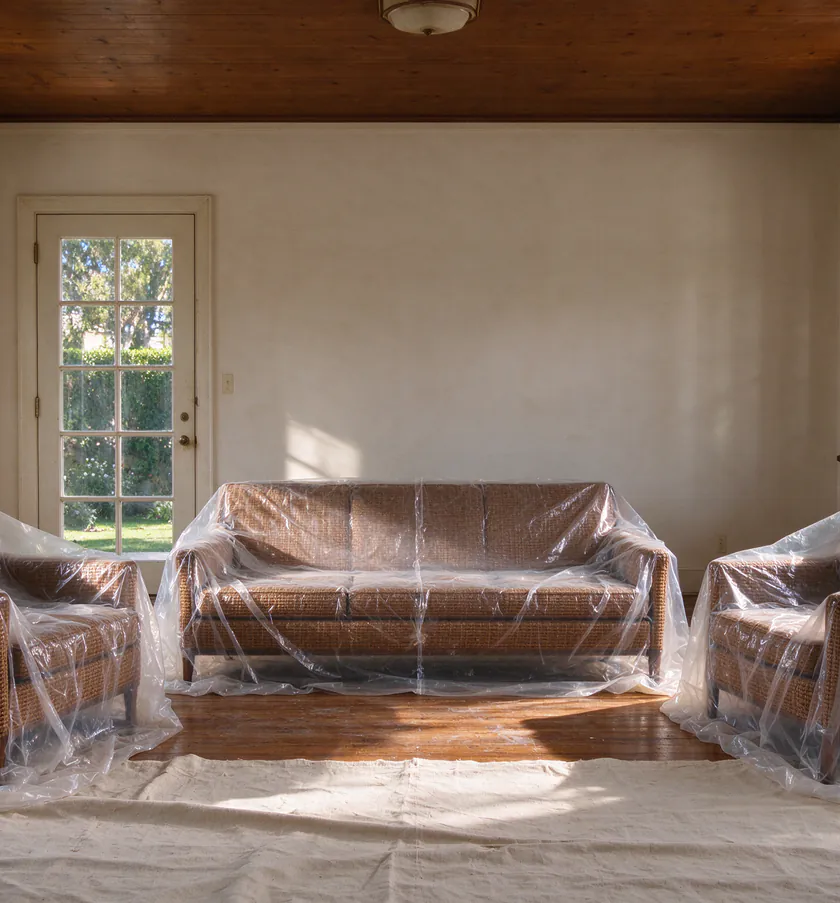
Most dust comes from plaster openings and patching. Cutting plaster releases fine dust and pieces of lath, and sanding a patch adds more. Protection usually means drop cloths along the work path, plastic sheeting over furniture or around an opening, and dust collection at the cut. Attic and crawlspace work brings its own debris, old insulation and dirt, so hatches and the path to them are protected too.
In houses built before 1978, painted plaster and trim can contain lead, and federal rules set how firms disturb it. Older plaster, texture or insulation can also contain asbestos. The guide to lead and asbestos during rewiring explains what that means for openings and who tests. Ask for the quote to list how protection and cleanup are handled. Keep children and pets away from active work areas, and do not sweep or vacuum plaster dust with a household vacuum.
Rooms, furniture and access
Before work begins, clear the walls where openings are planned and the floor in front of each outlet. Keep the attic hatch and crawlspace access reachable; where the hatch is inside a closet, that closet will need emptying. Electricians will need the panel, the attic and the crawlspace at short notice throughout the job, so arrange parking, gate codes, dogs and alarm codes in advance.
Bedrooms are easier to live around if they are done as a group, so that a family sleeps in two rooms while the others are worked on, then swaps. A home office is easier if its circuit goes early, which gives it a modern grounded circuit for the rest of the job.
Summer attic heat in Los Angeles
LA’s access constraint is heat, not cold. NOAA’s 1991 to 2020 normals put the average August high at 91.3°F in Pasadena, with about 19 days at or above 90°F in that month, against 84.0°F and about 6 days in downtown Los Angeles. Woodland Hills averages 97.4°F in August, while LAX averages 76.7°F. Winter highs sit between 66°F and 70°F at all of those stations.
The following is inference, not a measured figure: attics run hotter than the outdoor air on a sunny day, so attic stages are hardest from July through October in Pasadena, the valleys and other inland areas, and much less of a constraint near the coast. Where a job has a lot of attic routing, it helps to schedule that part early in the day, or to plan the whole job for the cooler months. The post on planning attic electrical work around an LA summer goes into that in more detail.
Residents, duplexes and small apartment buildings
In a 2 to 4 unit building, each unit often has its own circuits, and sometimes its own panel, so units can be scheduled one at a time. Residents need notice before anyone enters, under the rules that apply to the tenancy, and the plan should say when each unit’s power will be off. Shared attics and crawlspaces mean one unit’s work can involve access through another’s space, which is worth settling before the start date.
A short checklist before the start date
Ask for the circuit sequence in writing, with the panel day marked. Confirm who patches which openings and when. Agree where tools and materials will be staged, and where the crew can park. Note any rooms that must stay usable. And keep the permit number handy, because the inspection visits will be scheduled against it. The replacement process guide explains why each stage waits for the one before, and the cost estimator shows how the same access factors move the budget. When you want a schedule for your own house, call or request an estimate.