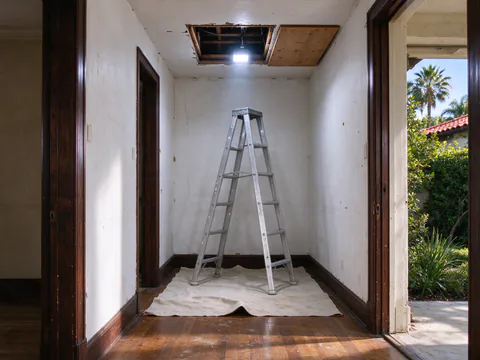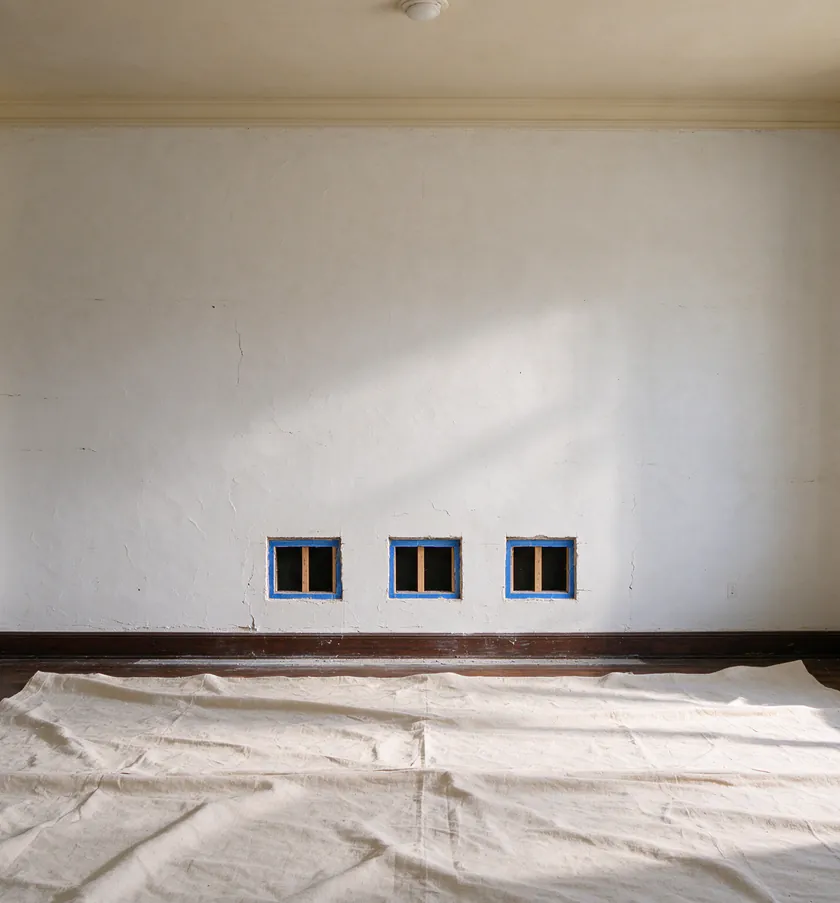
LA Knob and Tube handles rewiring plaster walls in older houses across Los Angeles, Pasadena, Glendale and South Pasadena, where the old wiring sits behind plaster on wood lath and every opening has to be planned. The work is carried out by licensed and insured electrical contractors. Rewiring a plaster house is mostly a question of routes. The new cable has to reach every outlet, switch and light, and the more of that distance it can travel through the attic, the crawlspace and existing cavities, the fewer holes go into finished walls.
Interior walls in houses built before the 1940s were usually finished in plaster over wood lath; gypsum drywall became common after the Second World War. Some walls have since been replaced in remodels, so a walk-through treats every original wall as plaster until it is seen.
What happens on the first visit
The first visit maps the circuits, live, dead and mixed, as described on the inspection page, and then looks at the house as a set of routes. In the attic, the question is how much open space sits above each wall and ceiling, and whether insulation, low clearance or a finished attic room gets in the way. In the crawlspace, it is height, obstructions and whether the floor framing leaves a clear path up into each wall. At the panel, it is where new home runs will land, and whether a panel upgrade belongs in the job.
Then the walls themselves. The visit notes the wall finish in each room, where coved ceilings, picture rails, plaster crown or original trim would complicate an opening, and where a two-story house has no open space above or below a first-floor wall. The result is a route plan and a list of openings, which becomes part of the quote.
Routes: attic and crawlspace first
Where a house sits on a raised wood floor over a crawlspace, first-floor outlets can usually be fed from below. The cable runs along the floor joists, up through a hole drilled in the bottom plate of the wall and into the cavity to the box. LADBS records show more than 12,000 permits from January 2020 to October 2026 for cripple-wall seismic retrofits on one- and two-family houses, work that only exists on raised floors, a sign that raised floors are a familiar house type in the city. If a retrofit is planned too, the seismic retrofit guide explains how to sequence the two.
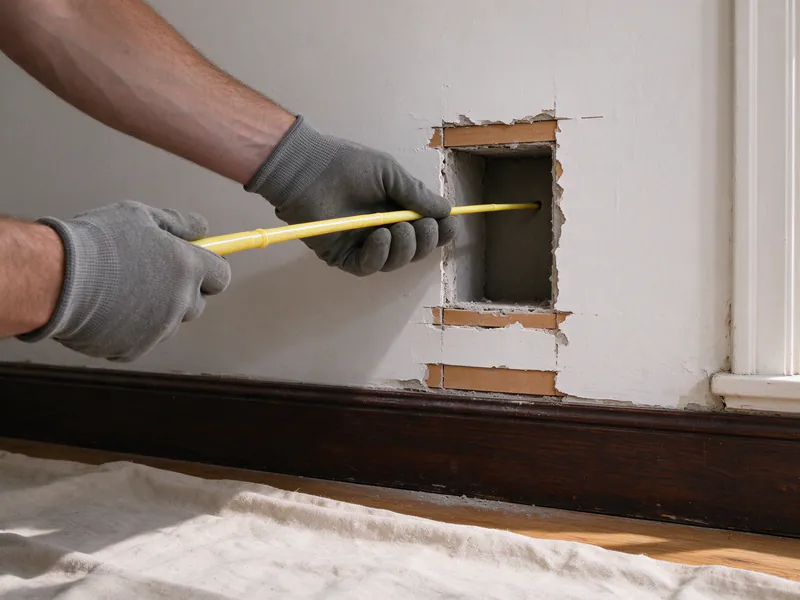
Ceiling lights, switches near the top of a wall and upstairs circuits are usually reached from the attic, dropping cable down through the top plate. Closets, built-in cabinets and the backs of baseboards offer hidden paths between rooms. Fiberglass rods and fish tape carry the cable through the cavity, and a borescope through a small hole can show what is blocking a route before anything larger is cut.
Where openings go and why
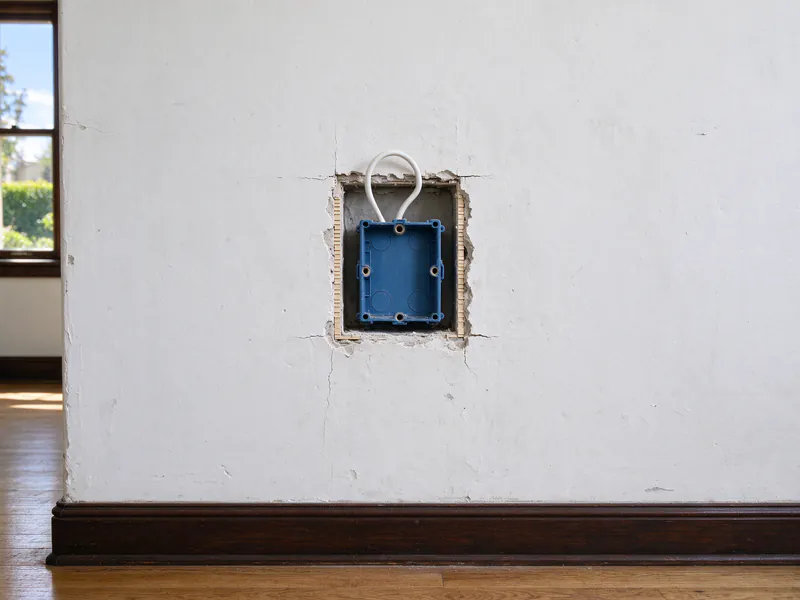
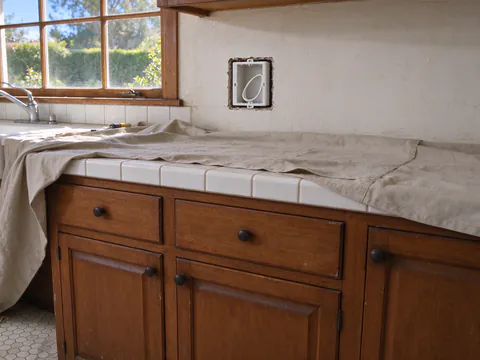
Openings go where the route cannot pass without one. The common places are at the box itself, where an old box is replaced or a new outlet is added; at a fire block or horizontal brace partway up the wall, which stops cable dropped from above; at a header over a door or window; and where a first-floor wall has a second floor above it and no crawlspace below. Each one is made small and for a reason.
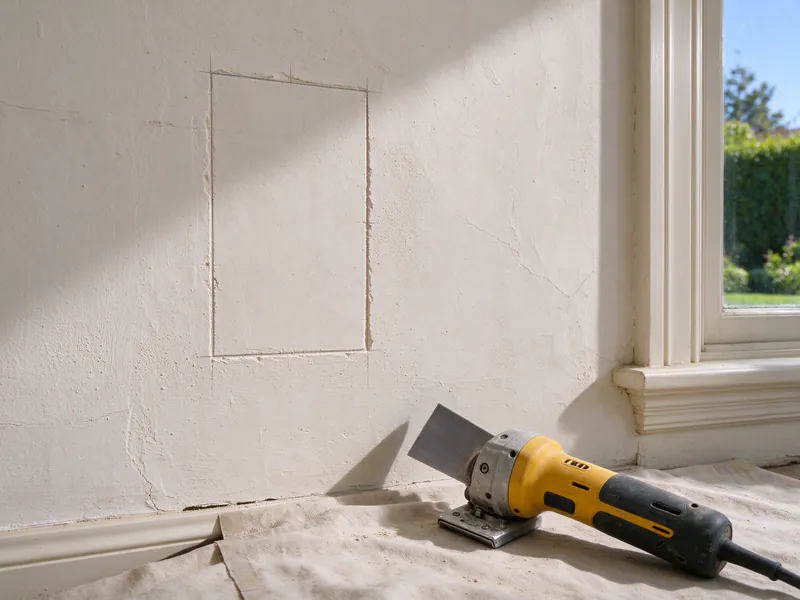
Plaster on lath needs a different cutting approach from drywall. The lath can vibrate under a saw and break the plaster keys that hold the wall to it, which spreads cracks beyond the opening. Scoring the outline first, cutting with a fine-toothed oscillating tool and supporting the plaster around the cut keep the opening to the size it was meant to be. Loose plaster near an opening can be fastened back to the lath before patching.
Patching, texture and paint are three different scopes
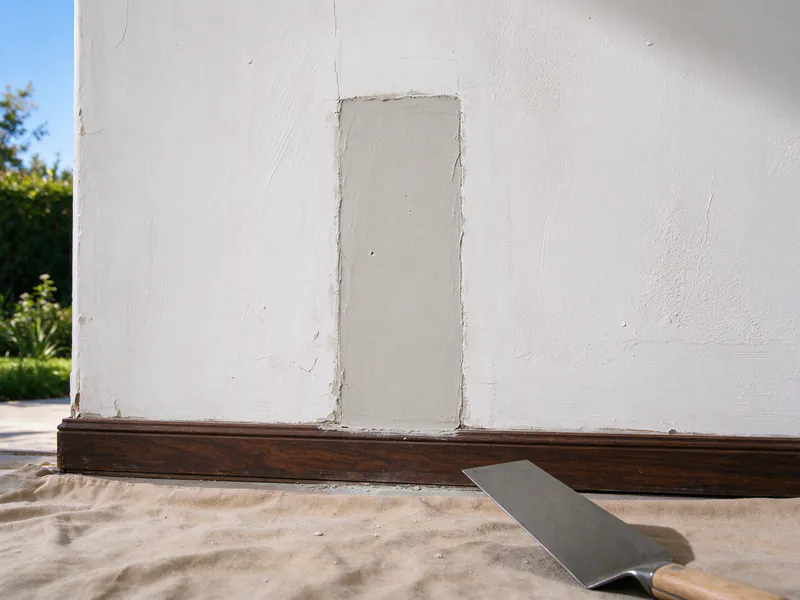
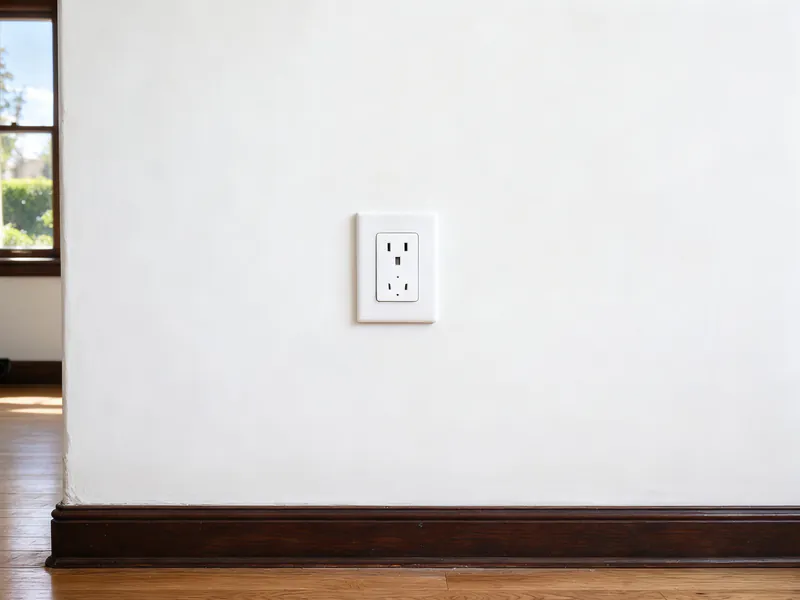
The word “patching” hides three separate jobs, and quotes often include one and not the others. Closing the opening means building it back to the thickness of the surrounding wall, with new lath or a fitted backing and base coats. Texture means matching the finish around it, whether that is a smooth hard coat, a sand finish or a hand-troweled pattern. Paint means making the repair disappear, which usually means painting the whole wall corner to corner, because spot painting on an old wall rarely blends.
The quote should list every planned opening and say who handles each of those three steps. If patching is left to you or to a plasterer, knowing the number and location of openings in advance lets you book that work in time. The quote checklist covers how to compare two quotes that treat patching differently.
Historic finishes and HPOZ houses
Some houses have finishes that are worth more than the wall itself: original wallpaper, stenciling, plaster moldings, coved ceilings, built-in cabinets and old-growth trim. Routes are chosen to avoid them where possible, and trim that has to come off is removed carefully and reinstalled. The walk-through flags these early, because they can change which route is best.
In the City of LA’s Historic Preservation Overlay Zones, preservation plans exempt interior alterations that do not change an exterior feature, so rewiring inside the walls does not need preservation review. Exterior changes, such as a new mast or meter, are a different matter. Pasadena and Glendale run their own historic district programs, and their rules for interior work are confirmed per address. The historic homes guide covers HPOZ review and the Mills Act, which lists electrical system replacement among the rehabilitation work it recognizes.
Lead paint and asbestos
Painted plaster in a house built before 1978 may contain lead paint. Under the EPA’s Renovation, Repair and Painting rule, firms whose work disturbs lead-based paint in homes built before 1978 must be certified by the EPA or an authorized state program and use certified renovators who follow lead-safe work practices. Cutting and patching openings is that kind of work. Ask the firm doing the openings and patching for its certification.
Asbestos is a separate question. South Coast AQMD Rule 1403 requires an asbestos survey by a certified consultant before renovation or demolition that may disturb asbestos-containing material, with limited exemptions, including an owner-occupant personally renovating their own single-unit home. Work done by a contractor does not fall under that owner exemption. Older textures, plaster finish coats and ceiling materials are what a survey looks at. The lead and asbestos guide explains what testing involves and how it fits the schedule.
Want to see the opening plan first?
A route plan lists every opening by room, so you know what to expect before you agree to a scope.
Living in the house during the work
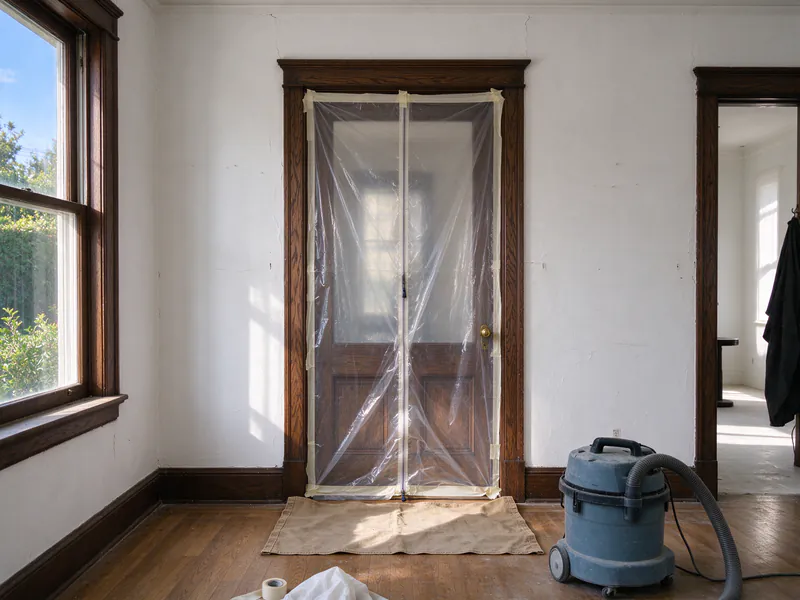
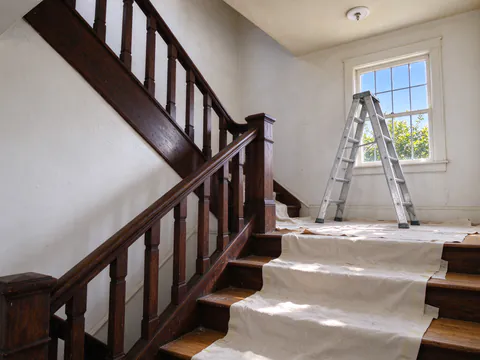
Plaster work makes fine dust, and openings are left open until the inspector has seen the wiring inside them. Rooms in progress are protected with floor coverings and sheeting, and circuits are replaced in sequence so most of the house has power most days. Where only some rooms still run on knob and tube, a partial replacement opens plaster only in those rooms. The living at home guide covers power, dust and scheduling in more detail.
Permits and inspection
Rewiring is permitted work. In the City of Los Angeles, LADBS issues the electrical permit and inspects the new wiring before walls are closed and again at the end, which is why openings stay open until that first inspection. Pasadena, Glendale and South Pasadena inspect through their own building departments. The permit guide covers who pulls the permit.
What plaster-wall rewiring costs
The wiring itself falls under the ranges in the LA cost guide, and for a whole house that is $10 to $20 per square foot of living area as a typical LA-area range, before panel work and patching. Patching has no single published price, because the same opening can be quoted as a rough close, a finished patch or a painted wall. What moves it is the number of openings, plaster or drywall, ceiling work, texture matching, historic finishes and paint scope. Plasterers in the Los Angeles metro earn a mean wage only about 2.5% above the national mean, according to the Bureau of Labor Statistics, so the size of the patching scope matters far more than local labor rates. The whole-house rewiring page covers how the full job is planned.