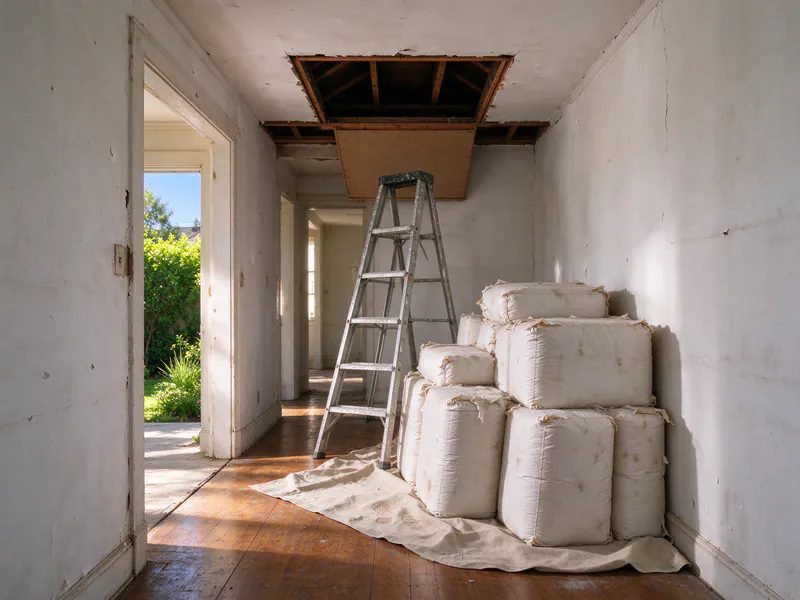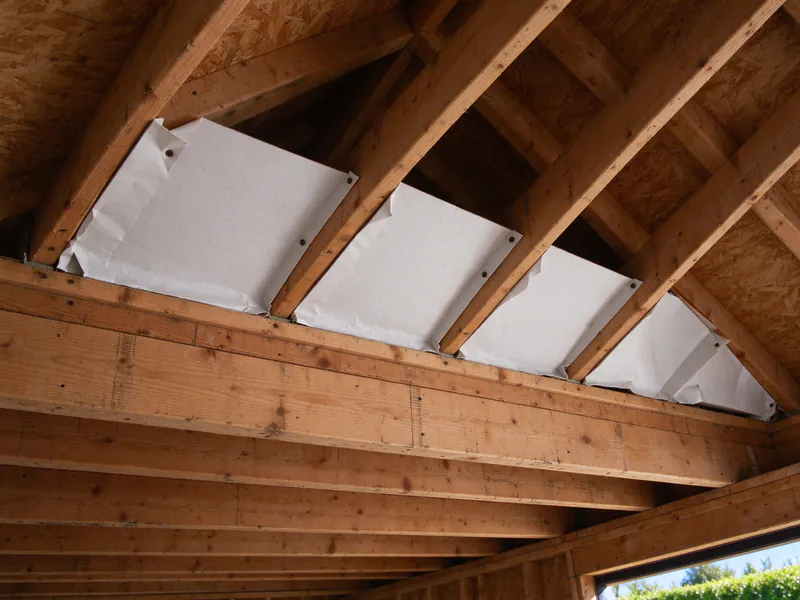
LA Knob and Tube handles the wiring side of knob and tube attic insulation in California, across Los Angeles, Pasadena, Glendale and South Pasadena: mapping which attic runs are live, explaining the state’s certification path, and replacing the attic circuits where that is the better answer. The work is carried out by licensed and insured electrical contractors. The usual trigger is an insulation quote that stops at the attic hatch, because the installer saw porcelain knobs on the joists.
That pause is correct. Knob and tube was designed to run in open air, and California’s code treats insulation over it as something that needs either a signed survey or new wiring first.
What happens on the first visit
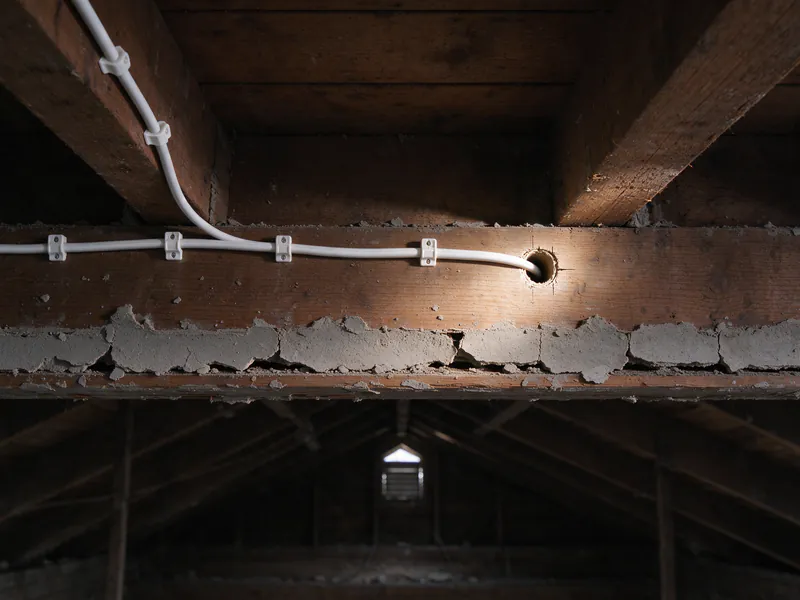
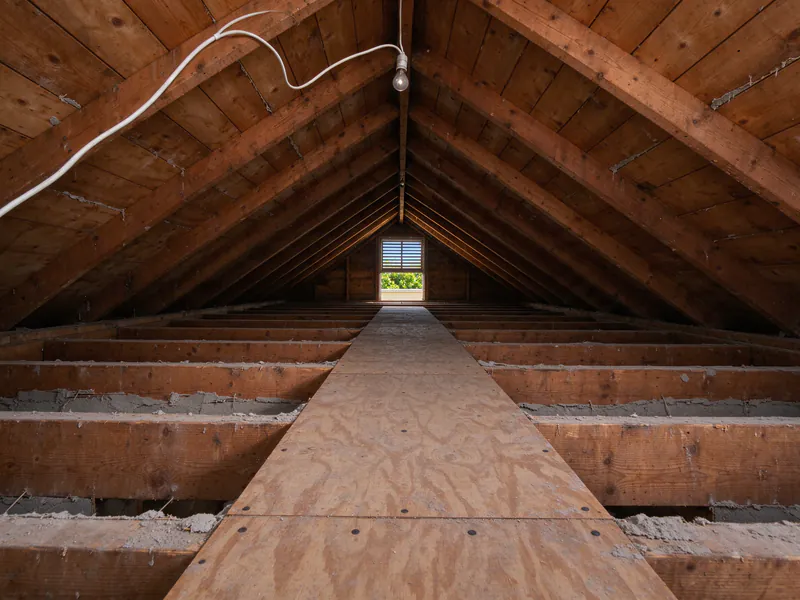
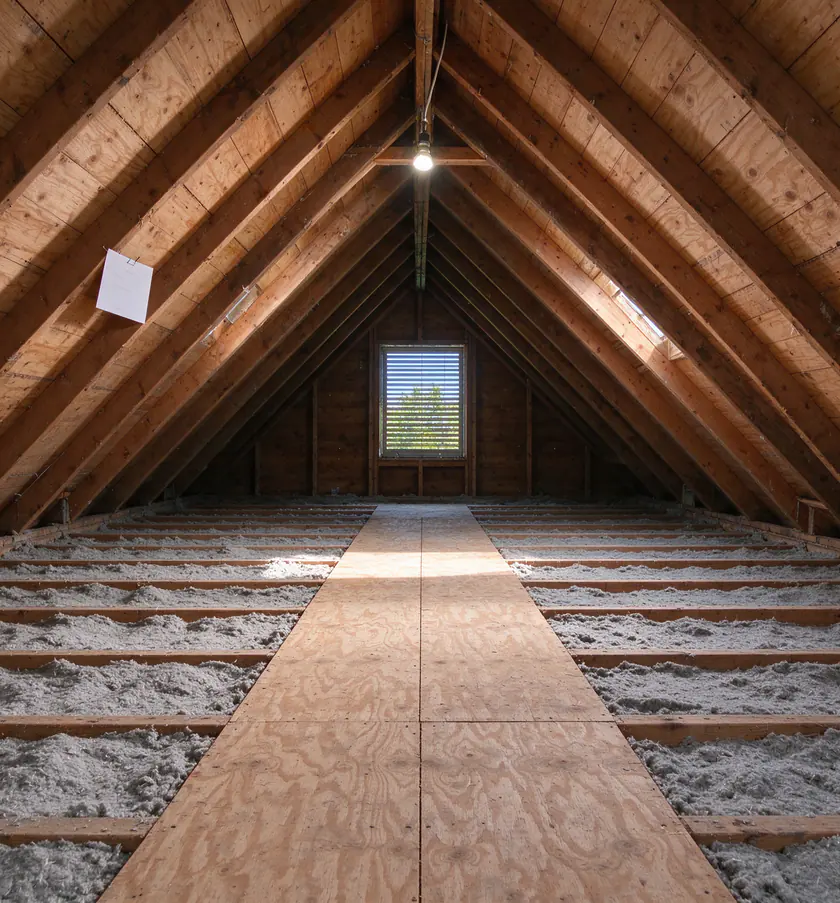
The first visit maps live, dead and mixed circuits, with most of the attention on the attic. At the panel, each circuit and its protection are identified. In the attic, the visible runs are followed to see which still carry power, where modern cable was spliced in, and whether old loose-fill or batts already lie over the conductors. The visit also records attic clearance, the hatch location, ceiling fixtures fed from above and how much of the attic floor can be reached. Nothing is pulled, cut or handled to see its condition.
From that, the realistic path becomes clear. An attic with a few short live runs in good condition may suit certification. An attic where the runs are long, spliced or already buried in insulation usually points to replacing the attic circuits.
Why insulation and knob and tube conflict
Knob and tube conductors are separated and held away from the framing on porcelain knobs, so each wire sheds heat into the surrounding air. Its current-carrying capacity assumed that open air. Insulation that surrounds the conductors traps that heat. A warmer conductor ages its rubber and cloth insulation faster, as the main knob and tube guide explains, and the effect is worst where a circuit is already loaded near its limit or protected by a fuse larger than the wire was meant to carry. The problem is not that insulation touches the wire once; it is that the wire runs warmer, year after year, in a place no one looks.
What California’s code says: section 394.12
Section 394.12 of the California Electrical Code says concealed knob and tube shall not be used in hollow spaces of walls, ceilings and attics where loose, rolled or foamed-in-place insulation envelops the conductors. California adds an exception for residential buildings regulated by the Department of Housing and Community Development. It says the article is not intended to prohibit insulation where knob and tube is present, provided six conditions are met:
- The wiring is surveyed by an electrical contractor licensed by the State of California, who certifies that it is in good condition, with no evidence of deterioration or improper overcurrent protection, and no improper connections or splices. Repairs, alterations or extensions to the electrical system require permits and inspections by the local building department.
- The certification form is filed with the building department, and a copy goes to the property owner.
- The insulation contractor posts a clearly visible notice in every accessible area where insulation has been installed around knob and tube, stating that caution is required when entering. The notice is printed in English and Spanish.
- The insulation is noncombustible as defined in the California Building Code.
- The insulation has no electrically conductive material as part of it or supporting it.
- Nothing in the exception stops the building department from requiring permits and inspections for the insulation itself.
The California Building Standards Commission’s rulemaking for the current code edition, in force since January 1, 2026, carried these six conditions forward unchanged. No City of Los Angeles bulletin or form specific to the certification was found, so how it is filed is confirmed with LADBS, or with the building department in Pasadena, Glendale or South Pasadena. The is it legal in California guide covers how the code treats existing knob and tube more broadly.
Certify and insulate
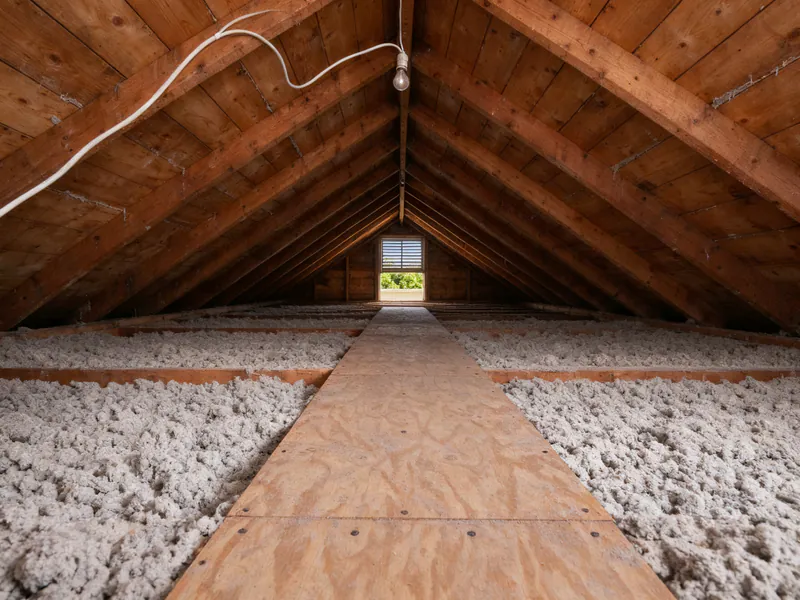
The certify path keeps the existing wiring in service. It suits an attic where the live runs are few, intact and correctly protected, and where the owner accepts the limits that come with it. Two of those limits are easy to miss. The insulation choice narrows: it must be noncombustible under the building code’s definition and contain no conductive material, which rules out products with a metal foil facing, and not every product sold as fire-resistant meets the noncombustible definition. And the knob and tube stays, now buried, so the next person who works in that attic, or the next insurer who asks, is dealing with live knob and tube under insulation. The California insurance guide covers why that can matter at renewal.
If the survey finds deterioration, an oversized fuse or breaker, or a bad splice, the wiring cannot be certified as it stands. The problems are repaired under a permit, or the circuits are replaced.
Replace, then insulate
The replace path takes the live knob and tube out of the attic before insulation goes in. The attic circuits are rewired with modern cable, routed and secured along the framing, the old runs are disconnected at both ends, and accessible dead runs can be removed so the attic floor is clear. After that, the insulation contractor can install any product suited to the attic, with no certification and no notices for the replaced wiring. Replaced circuits in living areas get arc-fault protection under the California Electrical Code, which the AFCI and GFCI guide explains.
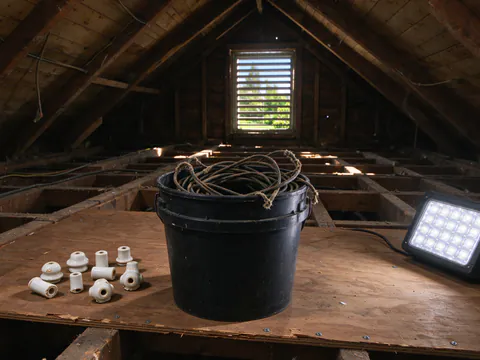
This is often a partial replacement, limited to circuits that run through the attic, with a written list of anything that remains in the walls. Dead runs are covered on the removal page, and the guide to active and abandoned knob and tube explains how the two are told apart.
The energy-code exception for attics with knob and tube
California’s energy code, Title 24 Part 6, generally requires added insulation and air sealing when certain alterations, such as some reroofs, touch a vented attic. The state’s alteration checklist for that requirement, in the 2022 edition, lists exceptions, and one of them is “attic with knob and tube wiring.” Another is where the alteration would directly cause the disturbance of asbestos.
That exception is narrow. It means a reroof does not force insulation over live knob and tube. It does not make insulating over it allowed; the electrical code’s conditions above still apply to anyone who chooses to insulate. Confirm the current edition’s exception list with the building department when the permit is pulled.
Planning a reroof or insulation upgrade?
Sort out the attic wiring first, so the insulation goes in once and without conditions.
Summer heat and scheduling
Attic work in the LA basin is hardest in late summer. By NOAA’s 1991 to 2020 climate normals, Pasadena’s August average high is 91.3°F, with about 74 days a year at 90°F or above, against 84.0°F and about 25 days for downtown Los Angeles. Attics run hotter than the air outside, so wiring work there goes slower in those months. Booking attic rewiring for the cooler part of the year, ahead of the insulation, avoids that.
Rebates
LADWP runs an attic insulation rebate for its residential customers, paid per square foot of insulation installed, with funds that are limited and terms that change. Check LADWP’s program page for the current rules before you schedule. Pasadena is served by Pasadena Water & Power, Glendale by Glendale Water & Power and South Pasadena by Southern California Edison, so owners there check their own utility.
Access, ceilings and restoration
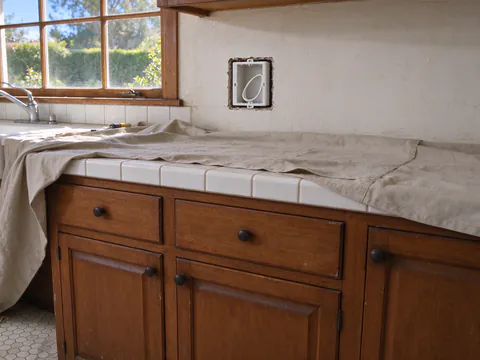
Attic rewiring usually needs fewer wall openings than any other part of a rewire, because the cable runs across open joists and drops straight into ceiling boxes and the tops of walls. Openings come where a ceiling fixture box is replaced, where a route has to pass blocking in a wall below, or where a low corner of the attic cannot be reached. Existing insulation over old runs has to be moved aside to work, which adds time and dust. The quote should name each opening and who patches it. The plaster wall rewiring page covers how openings in old ceilings are made and closed.
Permits
Replacing attic circuits is permitted electrical work, inspected by LADBS in the City of LA and by the building department in Pasadena, Glendale or South Pasadena. A certification under the exception is filed with that same department, which may also require its own permit and inspection for the insulation. The replacement process guide covers how inspections fit the schedule.
What it costs
Attic-only work has no single published price. What moves it is the number of live circuits that run through the attic, attic clearance and how much of it can be reached, whether old insulation has to be moved, ceiling boxes to replace, and whether the panel has room for the new circuits. If the attic work turns into a whole-house job, the LA cost guide gives the ranges, and the inspection page covers the circuit map that comes first. If you are unsure whether the old wiring is a hazard while you decide, the is it dangerous guide covers the warning signs.