LA Knob and Tube rewires historic houses across Los Angeles, Pasadena, Glendale and South Pasadena, and rewiring a historic home in Los Angeles is mostly a question of where the work shows. Inside an HPOZ, interior rewiring that changes no exterior feature is exempt from preservation review. The exterior is different: a new mast, meter or panel on a street-facing wall can need approval. The rest is care with plaster, trim and original fixtures.
Historic designation also opens one financial door, the Mills Act, where electrical system replacement is named as the kind of work the program is meant to support.
What a historic electrical system looks like
A house built before 1940 can carry more than one system: the original knob and tube, typically running through the attic and crawlspace, plus whatever each later owner added, such as cloth-sheathed cable from a mid-century remodel, a breaker panel that replaced the fuse block, or a kitchen rewired in modern cable. Original push-button switches, ceiling fixtures and baseboard outlets may still be on the original circuits, or may have been rewired already.
That layering is why a historic rewire starts with a circuit map rather than a room count. The knob and tube inspection separates live, dead and mixed runs, and the guide to knob and tube vs cloth wiring explains how the generations differ.
Historic Preservation Overlay Zones in Los Angeles
City Planning’s HPOZ map lists 35 completed HPOZs and one proposed. They include Angelino Heights, Highland Park-Garvanza, Jefferson Park, Lincoln Heights, Hancock Park, Windsor Square, Miracle Mile, Harvard Heights, Pico-Union, University Park, West Adams Terrace and El Sereno-Berkshire Craftsman, among others.
Interior work is exempt
The Highland Park-Garvanza preservation plan exempts “interior alterations that do not result in a change to an exterior feature.” A City Planning staff report for the Oxford Square HPOZ says the same thing citywide: interior work with no change to the exterior is exempt from review. Each HPOZ has its own plan, and the exemptions are listed in its section 3.5, so check the plan for your district. LADBS records show how ordinary interior rewiring is in these districts: 295 of the 3,886 house rewire permits issued in the City of LA from January 2020 to October 2026 were on HPOZ-zoned parcels.
The exterior is where review applies
The same Highland Park-Garvanza plan, in its guidelines for mechanical equipment, says electrical masts, headers and fuse boxes should be located at the rear of a structure where possible, that utilities should go underground where feasible, and that wiring can run through interior walls instead of along visible facades. In practice that affects a rewire in three places:
- Service location. If a panel upgrade moves the meter or mast, or adds one, its placement on the house matters. Keeping it on a side or rear wall, or where the existing one is, keeps the work simpler.
- Exterior runs. Conduit along a street-facing wall is the kind of visible change the plans discourage. Routes are chosen to stay inside.
- Exterior fixtures and outlets. Porch lights and new exterior outlets are small, but they are exterior features.
Where a change could need review, talk to City Planning’s Office of Historic Resources before the service location is settled. The panel upgrade vs rewiring guide covers how the utility fits in.
Pasadena, Glendale and South Pasadena
Outside the City of LA, the districts and review bodies are different. Pasadena’s landmark district map lists 30 districts, including Bungalow Heaven, the city’s first, designated in 1989 and listed on the National Register in 2008 with 522 contributing buildings, along with Garfield Heights, Historic Highlands, Washington Square and others. Glendale lists nine designated historic districts, including Rossmoyne, Cottage Grove and Brockmont Park, with two more pending.
Each city has its own historic review process, and their rules on interior work were not something this guide could confirm. For an address in a Pasadena or Glendale district, or in South Pasadena, what needs review is confirmed per address with that city’s planning and building departments before work is scheduled.
Protecting original finishes
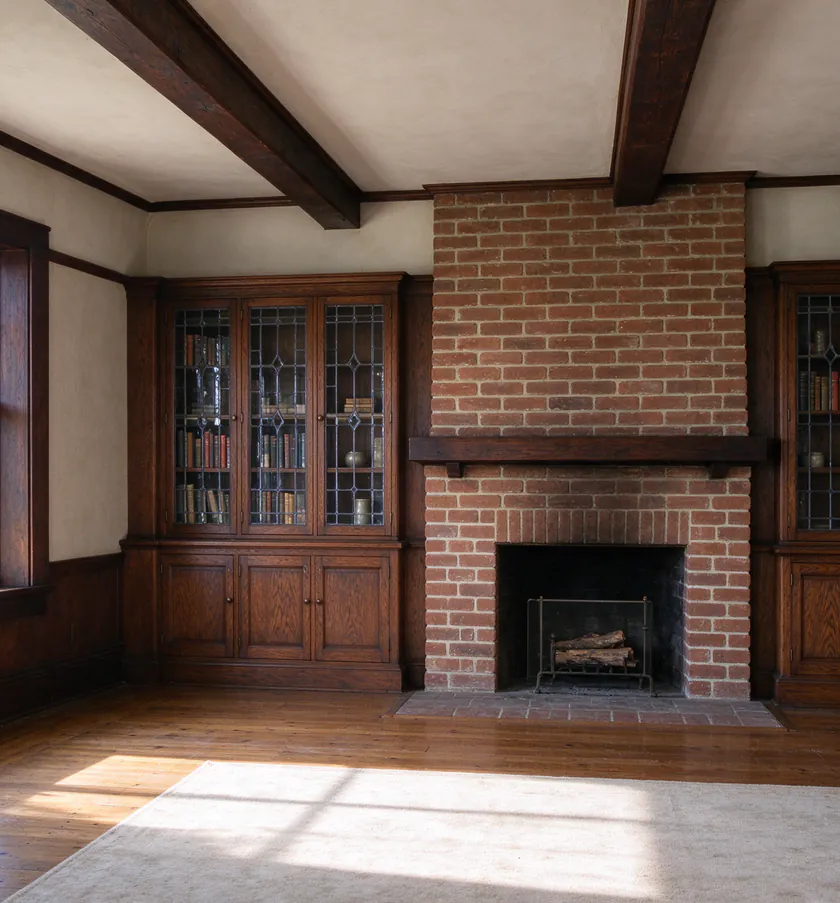
Most of the care in a historic rewire goes into the inside of the house. Walls of that era were typically finished in plaster on wood lath, and where a house still has coved ceilings, picture rails, original trim, built-in cabinets or box-beam ceilings, each one shapes where openings can go.
The approach is the same one used in any plaster house, applied more strictly. Routes go through the attic and crawlspace first. Openings are placed where they are easiest to restore: inside closets, behind built-ins, at the box locations themselves, and in plain wall rather than through a run of trim. Trim that has to come off is removed, labeled and reinstalled rather than cut. The plaster wall rewiring page explains how openings are sized and patched, and the quote should say who restores each one and to what finish.
Original fixtures can often be kept. A fixture can be taken down, given new internal wiring and rehung on the new circuit. Push-button switches are a matter of taste; reproductions are made for modern boxes and wiring.
Lead paint, asbestos and old finishes
Any house built before 1978, which includes every pre-war house, may have lead in its painted plaster and trim, and federal rules govern how firms disturb it. Older materials can also contain asbestos, and South Coast AQMD rules can require a survey before renovation. The lead and asbestos guide explains what that means for openings.
When the rewire meets a renovation
Historic houses are often rewired as part of a larger project: a kitchen restored, a bathroom rebuilt, a seismic retrofit in the crawlspace, an attic insulated. Each one is a chance to rewire the circuits behind walls that are already open, at less cost in patching than doing it later. The order matters. Wiring that runs through a wall should go in before that wall is closed, and an attic should be rewired before new insulation covers the old runs, a sequence the attic insulation page explains.
The Mills Act
Los Angeles’s Mills Act program offers a potential property tax reduction to owners of Historic-Cultural Monuments and HPOZ contributing properties who commit to rehabilitating and maintaining them under a 10-year contract that renews each year. The program has valuation limits, and the city has put new applications on hold while it reassesses the program. City Planning’s application criteria ask whether the scope goes beyond routine maintenance, naming seismic retrofit, electrical system replacement and window or roof rehabilitation as examples. The post on Mills Act applications and electrical work covers how a rewire fits the program’s plan and its current application status. No one can promise a property will be accepted.
What a historic rewire costs
The same drivers apply as anywhere, with historic finishes added: more careful openings, trim removal and reinstallation, fixture rewiring, and restoration to a higher standard. The Los Angeles cost guide gives the ranges and explains why plaster restoration is priced separately. When you want a historic house mapped and its openings planned before anyone cuts plaster, call or request an estimate.