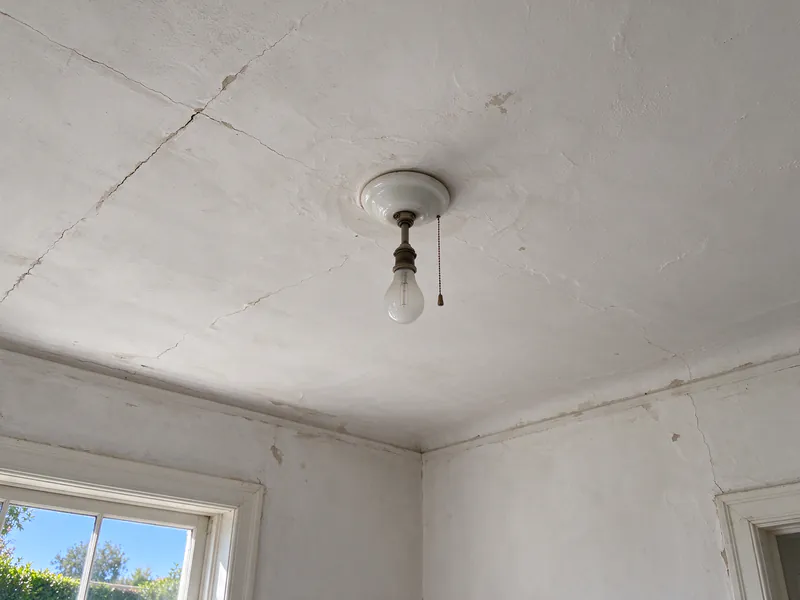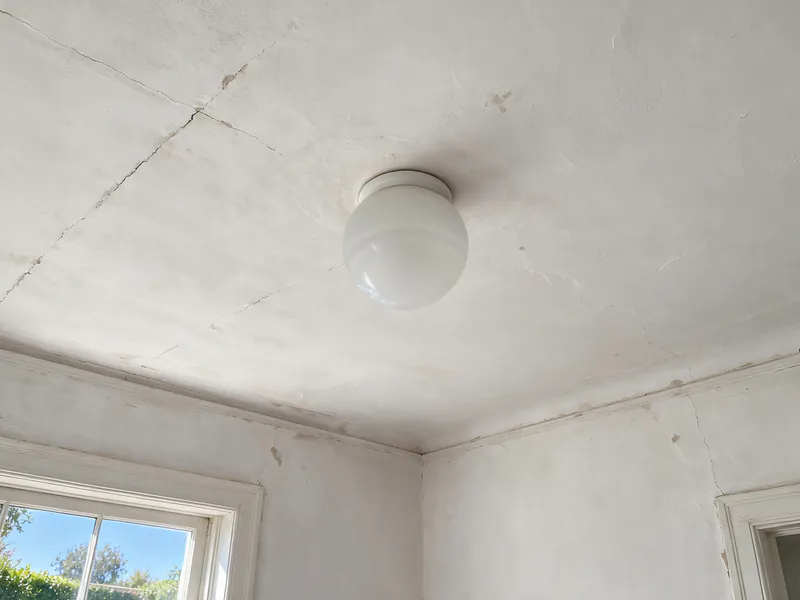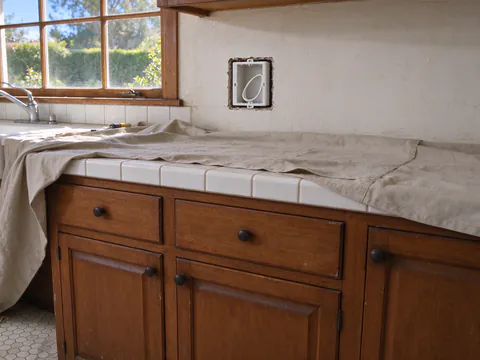
LA Knob and Tube handles whole-house rewiring across Los Angeles, Pasadena, Glendale and South Pasadena, replacing every old branch circuit in the house, whether it is knob and tube, cloth-sheathed cable or later wiring that was spliced into both. The work is carried out by licensed and insured electrical contractors. Whole house rewiring in Los Angeles is rarely about one wiring type. A house built in the 1920s may have knob and tube in the bedrooms, cloth-sheathed cable from a 1950s kitchen, a bathroom redone in the 1990s and a garage circuit nobody remembers adding.
That mix is why a whole-house scope is planned from a map, not from the age of the house. In the City of Los Angeles, 19.1% of housing units were built before 1940 and 27.9% before 1950, according to the Census Bureau’s American Community Survey, and the decade in between is when cloth-sheathed cable, usually without a ground wire, replaced knob and tube in new construction.
What happens on the first visit
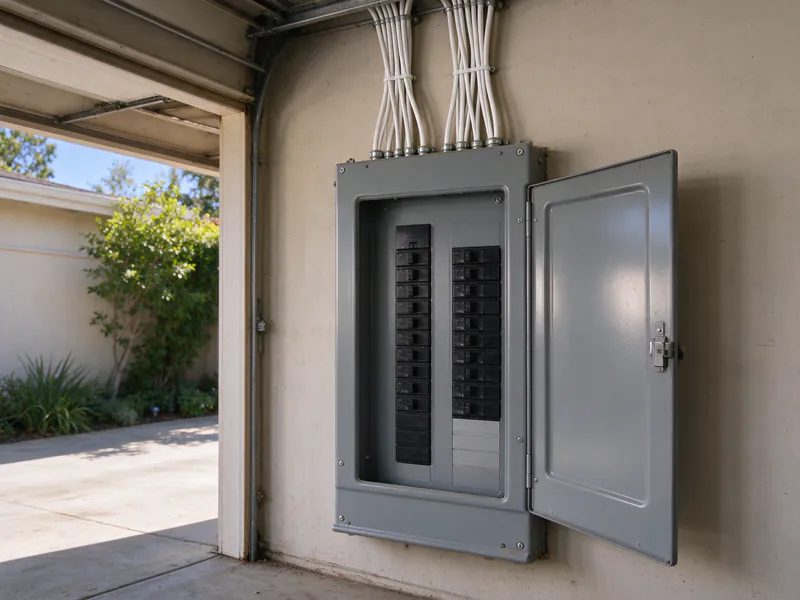
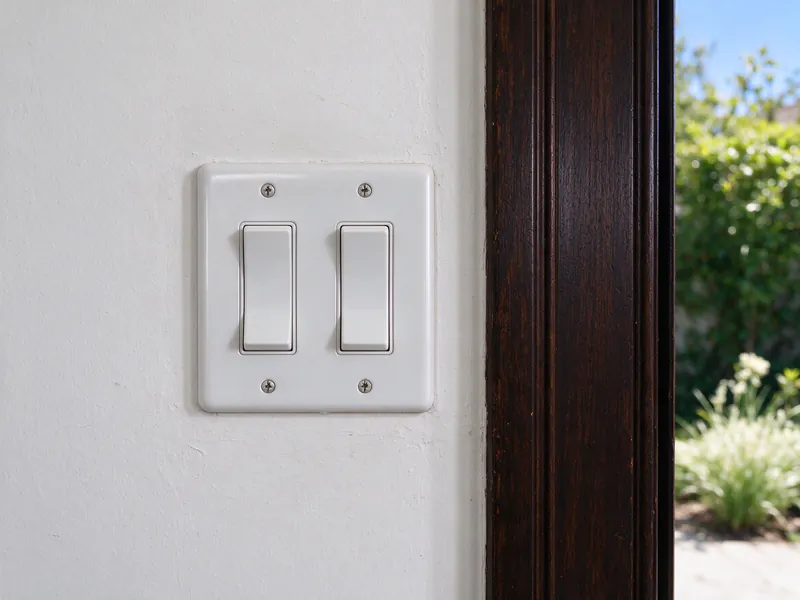
The first visit maps every circuit in the house: which run on knob and tube, which on cloth-sheathed cable, which on later wiring, and which are a mix. At the panel, each circuit, its protection and the spare capacity are recorded. In the attic and crawlspace, the routes are followed, along with splices where newer wiring was tied into older runs. Outlets, switches and lights are matched to their circuits room by room.
The visit also looks at the house as a job site. Attic clearance, crawlspace height, wall finishes, coved ceilings and original trim all decide where cable can travel and where openings are needed. That becomes the route plan, and the quote lists each opening and who patches it.
Mixed-era houses and cloth-sheathed wiring
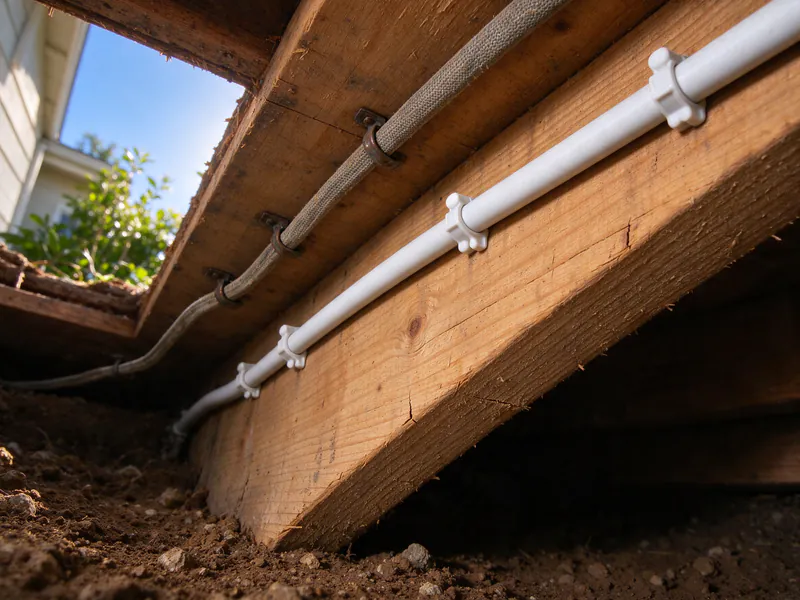
Knob and tube is the oldest layer, but it is not always the weakest. Cloth-sheathed cable installed in the 1940s and 1950s ran two insulated conductors in a single woven jacket, usually with no ground wire. Its rubber insulation ages the same way knob and tube’s does, and because the conductors are bundled together, it does not shed heat into open air the way separated knob and tube runs do. The knob and tube vs cloth wiring guide explains how to tell them apart.
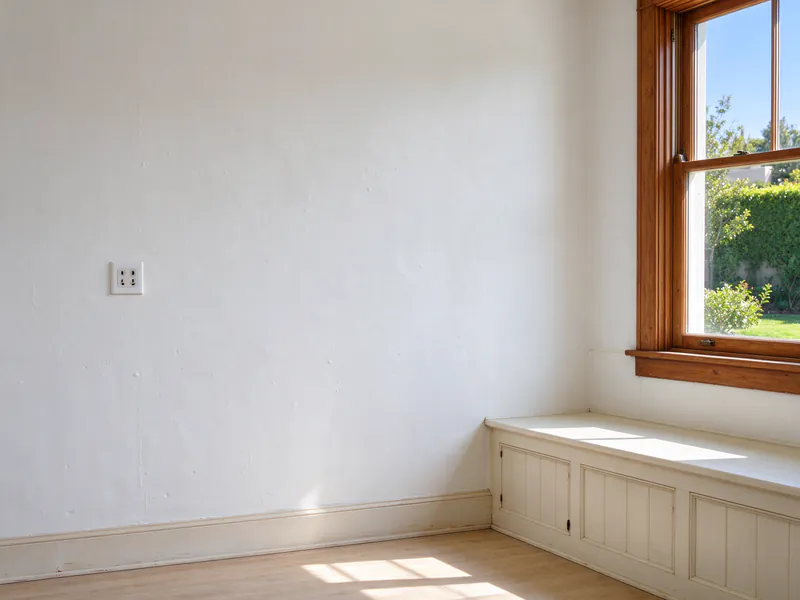
The riskiest points in a mixed house are often the joints between eras. A later owner extending a circuit may have spliced new cable onto old conductors without a box, or tied a new outlet into the middle of a knob and tube run. Those splices are hidden in attics, walls and ceilings, and they are why a three-prong outlet on a newer-looking box proves nothing about what feeds it. A whole-house scope removes those joints by replacing every circuit back to the panel.
LADBS records show how ordinary this kind of job is. Of 3,886 rewire permits on one- and two-family dwellings from January 2020 to October 2026, 1,137 describe a complete or whole-house rewire. One filed in 90043 reads, in part, “Install a 200A main … Provide a complete rewire of all the old knob & tube.”
Adding circuits, not just replacing them
Original circuits were laid out for a few lights and outlets per room. A whole-house rewire is the one chance to fix that without opening walls twice. The new circuit plan usually separates kitchen countertop outlets onto their own circuits, gives bathrooms, laundry and any home office their own, adds outlets where rooms had one or two, and provides dedicated circuits for appliances that used to share. Planning them all at once also shows whether the panel has room.
Code protection on the new work
New and replaced circuits follow the current California Electrical Code, in force since January 1, 2026. Branch circuits in kitchens, living and dining rooms, bedrooms, closets, hallways, laundry areas and similar rooms get arc-fault circuit interrupter protection, either at the breaker or at the first outlet. Kitchens, bathrooms, laundry areas, garages and other wet or damp locations get ground-fault protection. New 15- and 20-amp receptacles in the house are tamper-resistant. Every new circuit carries an equipment grounding conductor, so the grounded receptacles at the end of it are grounded in fact. The AFCI and GFCI guide explains what each device does.
Sequencing an occupied house
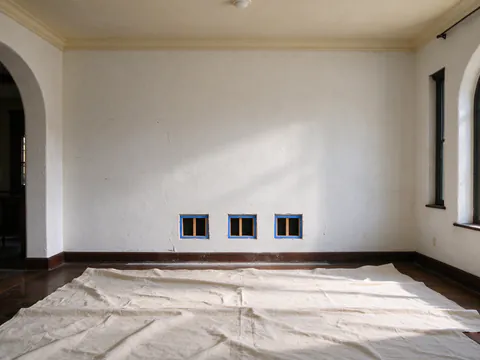
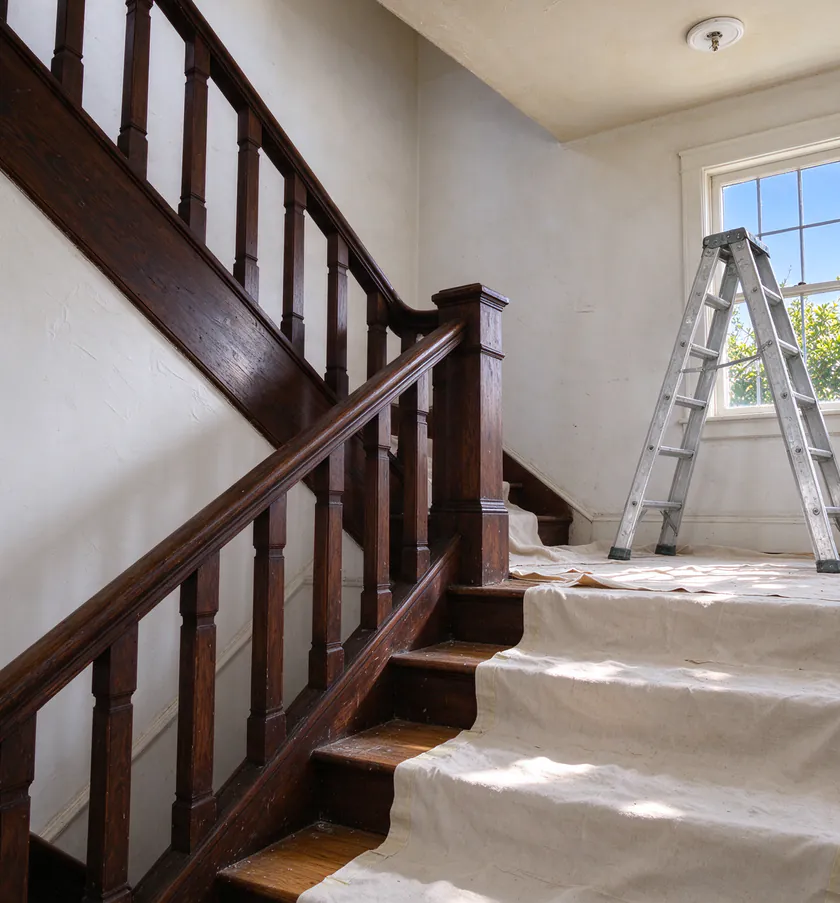
A whole-house rewire can usually be done with people living in the house. The work is sequenced circuit by circuit, so the new circuit is run and connected before the old one is cut off, and most of the house has power most days. Rooms in progress are covered and sheeted, and openings stay open until the city inspector has seen the new wiring inside them. The kitchen and bathrooms can be scheduled so they are not out of service on the same day. The living at home guide covers power, dust and daily routine.
Two- to four-unit buildings follow the same logic with one more layer: each unit has its own circuits and often its own panel and meter, so the sequence is planned unit by unit with residents or occupants in mind.
Panel coordination
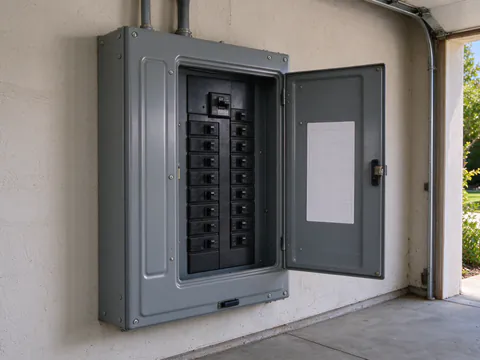
A whole-house rewire often brings the panel into question. A fuse box, a panel with no spare spaces, or an undersized service cannot take a new circuit plan. LADBS permit descriptions pair the two, for example a 200-amp service upgrade with sections of knob and tube rewired. Changing the panel is a separate scope from the branch wiring: a new panel alone removes no knob and tube. When both are needed, they are sequenced so the new panel is in place before new circuits land on it, with the utility involved where the service changes. The panel upgrade page covers that work, and the panel upgrade vs rewiring guide explains when each is needed.
Want to see the full circuit plan?
The map shows what is original, what is later and what a whole-house scope would replace and add.
Access, openings and restoration
New cable for first-floor outlets usually comes up from a crawlspace where the house has a raised floor, and ceiling lights and upstairs circuits are reached from the attic. Openings are made at boxes and where routes have to cross fire blocks, headers or walls with no open space above or below. In a plaster house, the plaster wall rewiring page covers how openings are cut, closed, textured and painted. In houses built before 1978, cutting painted plaster brings in the EPA’s lead rules, and the lead and asbestos guide explains what that involves.
Permits and inspection
A whole-house rewire is permitted work. In the City of Los Angeles, LADBS issues the electrical permit, and LADBS records from January 2020 to October 2026 show that all but one house rewire permit was issued as an express permit, without plan check. The inspector checks the new wiring before walls are closed and again at the end. Pasadena, Glendale and South Pasadena permit through their own building departments. The replacement process guide covers each stage in order.
What whole-house rewiring costs
Whole-house knob and tube replacement typically runs $10 to $20 per square foot of living area, a typical LA-area range, before panel work and patching. A national budgeting range for a typical house is $12,000 to $35,000. Where a house falls depends on the number of circuits, attic and crawlspace access, one story or two, plaster or drywall, how many new circuits are added, panel work and how much patching and paint the quote includes. Electricians in the Los Angeles metro earn a mean $39.57 an hour against $34.37 nationally, according to the Bureau of Labor Statistics, which explains part of the local premium; a wage is not a billing rate, which also carries licensing, insurance and overhead. The LA cost guide breaks the price down, and the cost estimator shows how the factors combine.