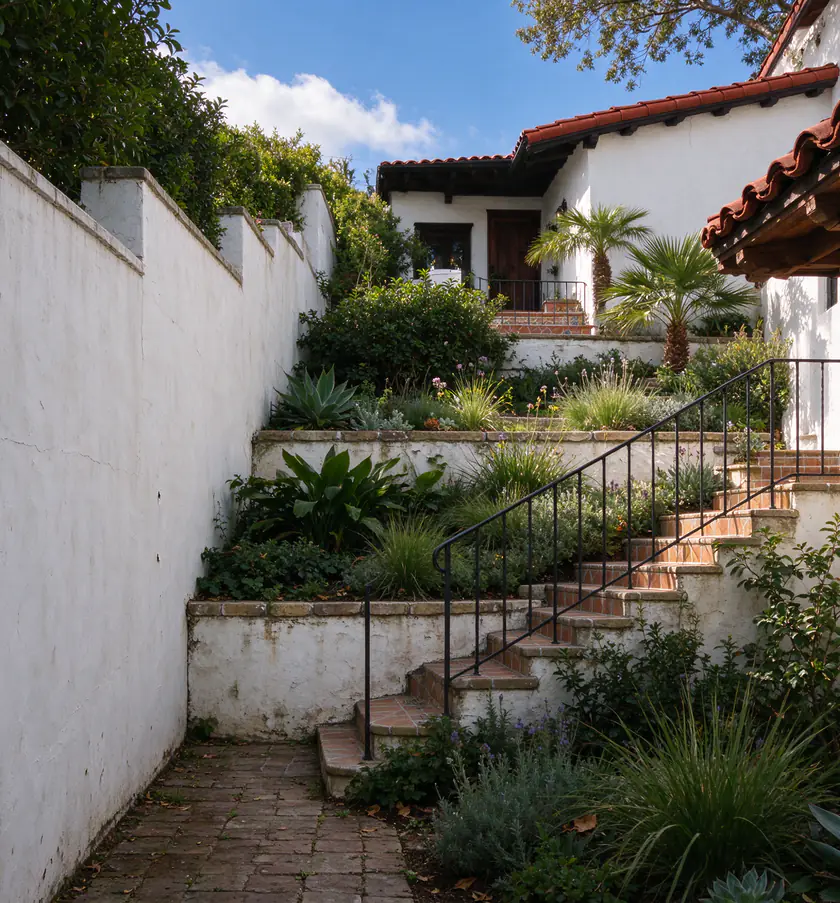
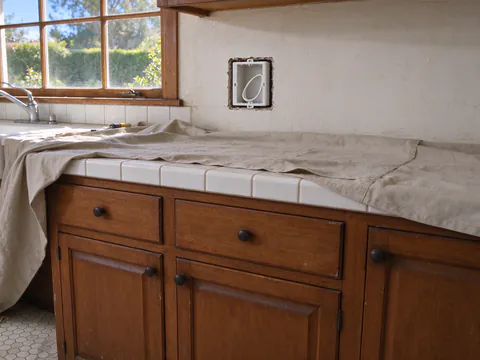
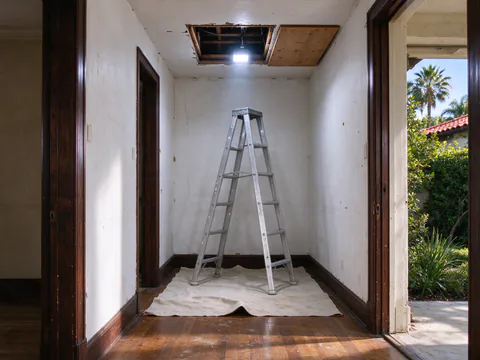
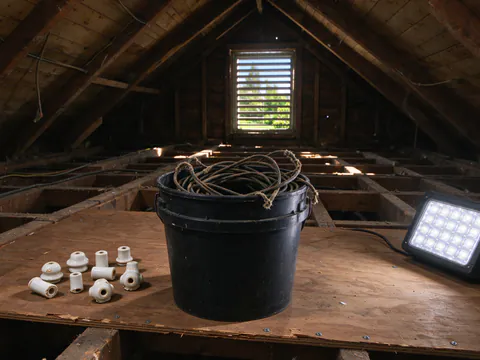
A Los Feliz or Atwater Village house with a redone kitchen and bath raises a narrower question than an untouched one: not whether to rewire, but which circuits still run on the original wiring. LA Knob and Tube handles knob and tube replacement in Los Feliz and Atwater Village, from the hillside streets of Los Feliz to the flatter blocks of Atwater Village, and one LADBS permit in 90027 describes that kind of job in plain words: a partial rewire, removing knob and tube wiring in parts of the house.
Rewire permits are frequent here. Between January 2020 and October 2026, LADBS issued 83 single-family rewire permits in 90027, about 41 for every 1,000 electrical permits on houses, and 91 in 90039. The housing behind those numbers is old. By Census Bureau estimates, 31.1% of homes in 90027 and 40.5% in 90039, which takes in Atwater Village, went up before 1940, and the two ZIP codes together hold 5,338 owner-occupied single-family houses from that era.
Houses that are partly done
A house that has been remodeled once or twice tends to carry two or three generations of wiring. The kitchen and bath may be on modern cable with grounded outlets, an added family room on its own circuit, and the bedrooms, hall and porch lights still on the original knob and tube. Sometimes a remodel fed new outlets from an old circuit, so a modern-looking room still depends on old conductors upstream.
That is why the circuit map matters more than the age of the house. The map records which circuits are active knob and tube, which old runs are dead and disconnected, and which are mixed, where later cable was spliced onto the old system in an attic or wall. The active vs abandoned guide explains how each is identified and why only the active and mixed circuits drive the scope.
The mixed circuits deserve the closest look. Knob and tube was sized for a few lamps and small appliances, and its rubber and cloth insulation was designed to shed heat into open air. When a modern room is fed from an old circuit, the load on those conductors goes up, and the splice where new cable meets old wire is often hidden in an attic or wall with no box around it. That combination, more current through aging insulation plus a buried connection, is why mixed circuits usually rank first in a partial scope even when the outlets in the room look new.
With that map, a partial knob and tube replacement replaces what is left and hands the owner a written list of anything still remaining. Dead runs that are disconnected at both ends can usually stay in the walls; the knob and tube removal page explains when taking them out is worth the openings.
Outlets that look modern
Remodeled rooms can hide old circuits behind new faceplates. A grounding-type receptacle can be fitted to a two-wire circuit with nothing connected to its ground terminal, and it looks the same as a grounded one from the room. The code allows ungrounded replacements only under specific conditions, and the three-prong outlet guide covers what is permitted and why a plug tester alone can mislead.
Insurance pressure in 90027
Residential California FAIR Plan policies in 90027 nearly doubled between September 2021 and September 2025, from 250 to 483, and in 90039 they rose from 336 to 433. The FAIR Plan publishes no reasons, and the growth cannot be tied to wiring. It does describe a tight market where an owner may be switching carriers, and carriers differ on knob and tube. A renewal or new application that asks about it is easier to answer with a documented map and, after the work, a final inspection. The insurance guide explains what that documentation covers and what it cannot promise.
Hillsides, crawlspaces and the permit
Where a Los Feliz house steps down a hill, the crawlspace can be roomy at the low side and nearly closed at the high side, and a steep roof can leave little attic clearance at the eaves. LADBS issued 215 permits in 90027 and 270 in 90039 since January 2020 for cripple-wall bracing and foundation bolting, so raised floors over a crawlspace are well represented. Where the crawlspace is usable, first-floor outlets are fed from below with openings only at the boxes; where it is not, routes come from the attic or through more plaster openings, each listed on the quote with who patches it.
The permit comes from LADBS, which issues nearly every house rewire permit in the city as an express permit without plan check. The inspector checks the new wiring before walls are closed and again at the end, and the circuits are replaced in sequence so most rooms have power most days.
Historic districts nearby
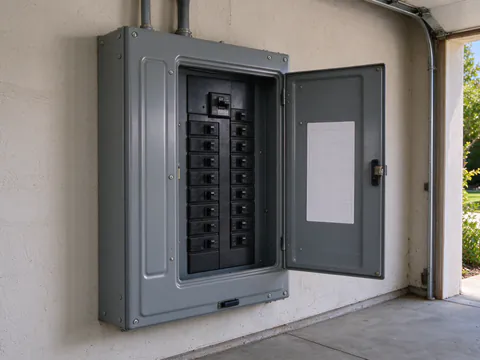
City Planning’s HPOZ layer has no overlay zone across the core of 90027 or in Atwater Village, though the Hollywood Grove and Melrose Hill HPOZs lie close by. For most houses here, that means a new panel or meter location is a matter for the owner, the electrician and LADWP. LADWP asks that a new meter spot be verified with its electric service staff before the panel is installed. Its inspector comes out only once the LADBS permit exists, and the utility puts a typical meter set at roughly two working weeks when nothing else is needed on its side, so the panel day is planned around that gap. The panel upgrade page explains when the service should change and when the existing panel can carry the new circuits.
Nearby, Silver Lake and Echo Park have older stock and an HPOZ in Angelino Heights, Glendale has its own permit office and utility, and Eagle Rock has similar pre-war houses without an overlay. The knob and tube inspection is the usual first step in any of them.