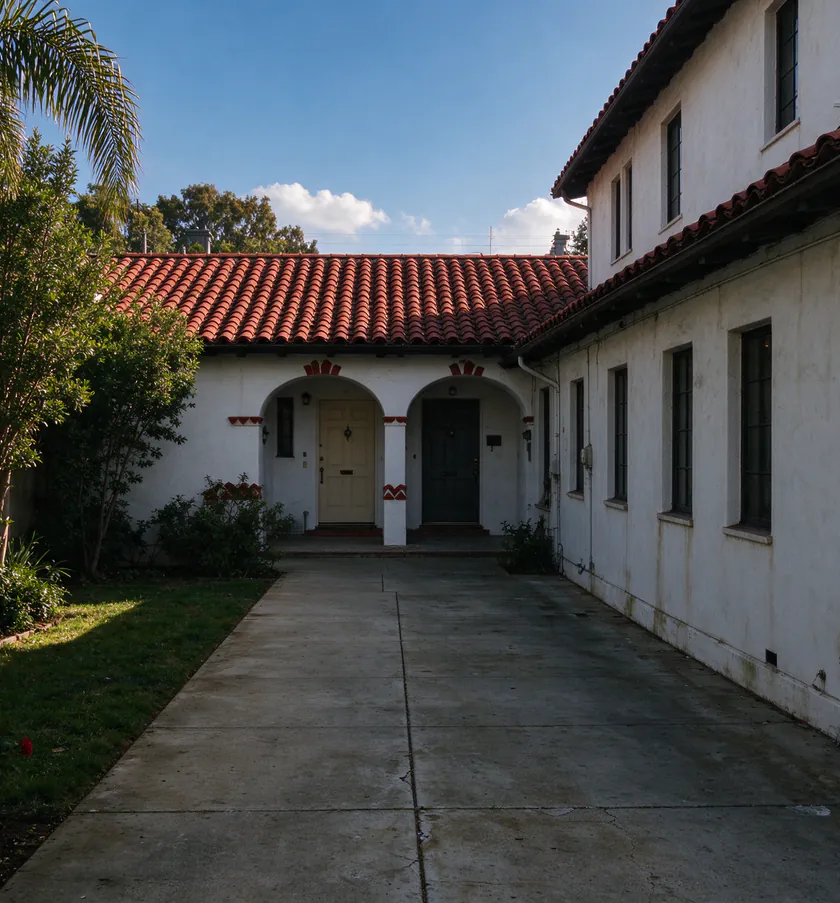
In Mid-City, the decision to replace old wiring can belong to a building rather than a house: a pre-war duplex or fourplex where one unit’s kitchen already has new circuits, the next unit is still original, and the owner has residents to plan around. LA Knob and Tube handles knob and tube replacement in Mid-City Los Angeles, Miracle Mile, Carthay Circle, Country Club Park, Wilshire Park and Oxford Square, in single-family houses and small apartment buildings alike.
ZIP code 90019 shows both halves of that mix. Its pre-1940 stock includes small two-to-four-unit buildings with 2,784 rented units, the largest of any ZIP code tested, alongside 3,311 owner-occupied single-family houses from the same era, by Census Bureau counts. Altogether, 45.0% of the housing in 90019 predates 1940.
Small multifamily buildings, unit by unit
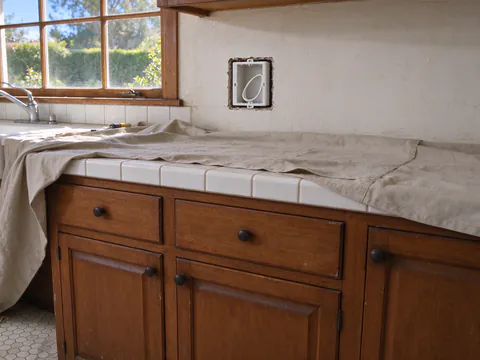
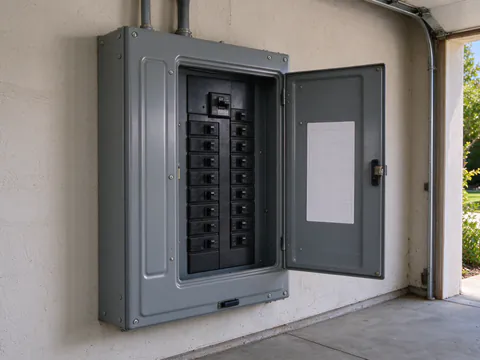
Where a pre-war duplex or fourplex has one service entrance, a meter for each unit and branch circuits that run unit by unit, there may also be a house panel for the stair lights, laundry or garage. Over the decades, each unit may have been updated on its own schedule. One kitchen gets new circuits during a remodel, another unit gets a few grounded outlets, and the knob and tube in the rest stays live.
The circuit map handles that by unit. It records which outlets and lights in each unit are still on knob and tube, which old runs have been cut dead, where later cable was spliced onto the old conductors, and which circuits cross from one unit’s panel into another’s space. That can happen where wiring was rerouted over the years, and it matters because a circuit fed from the wrong unit’s meter is both a safety and a billing problem.
With the map, an owner can phase the work. Units can be rewired one at a time, most easily when one is between occupants, with a partial replacement on each unit’s remaining circuits or a full whole-house rewiring scope applied unit by unit. Each phase ends with a written list of what remains.
Owner-occupancy, residents and the permit
Who lives in the building changes the paperwork. LADBS lets an owner pull an owner-builder electrical permit only on a single-family dwelling, and only with proof of ownership and proof that the owner lives there. On a duplex or fourplex, the permit is pulled by the licensed electrical contractor doing the work, which lists its state license, city business tax number and workers’ compensation carrier on the application.
Occupied units need a workable plan. Because circuits are swapped one at a time, a unit keeps power in most rooms on a normal workday, and every wall or ceiling opening appears on the quote with the name of whoever repairs it. Owners handle notice and access with their residents, and the sequence is built around the days the owner arranges. The guide to living at home during rewiring explains what a working day looks like from inside a unit.
Eight HPOZs and the exterior service
Eight Historic Preservation Overlay Zones fall within this part of the city: Miracle Mile, Miracle Mile North, Carthay Circle, South Carthay, Carthay Square, Wilshire Park, Country Club Park and Oxford Square. City Planning states that interior work with no change to the exterior is exempt from review, and each preservation plan lists its exemptions in section 3.5. Rewiring inside the walls proceeds on an ordinary electrical permit; across the city, 295 single-family rewire permits from January 2020 to October 2026 were on HPOZ-zoned parcels.
The exterior is where review applies. A multifamily building that moves from separate old meters to a new meter bank, or raises its mast, may be changing a street-facing wall. A meter bank on a front wall is hard to hide. Its placement is settled ahead of the permit application, so the overlay’s design guidance and the utility’s meter rules point the same way. Review procedures are laid out in the historic homes guide. Contributing buildings in these overlays can also qualify for a Mills Act contract, under which electrical replacement counts as rehabilitation work.
LADWP and multi-meter services
All of this area is LADWP territory. A changed meter panel starts with the utility confirming where the meters will go, and on a multi-unit building that confirmation covers the whole bank. LADWP’s inspector will not come out until LADBS has issued the electrical permit, and LADWP estimates a meter set in about ten business days if no other utility work is required. Where the existing service can carry the new demand, LADWP generally has no installation charge; street or transformer work is priced case by case. A new panel, as the panel upgrade page points out, does not by itself take out any knob and tube.
Raised floors in the flatlands
Raised wood floors are common under the pre-war buildings here, and the retrofit records reflect it. Since January 2020, 321 cripple-wall retrofit permits have gone out in 90019 alone, bolting sills and bracing the short walls under the floor, with 751 across the Wilshire community plan area. A crawlspace gives first-floor outlets an easy route from below.
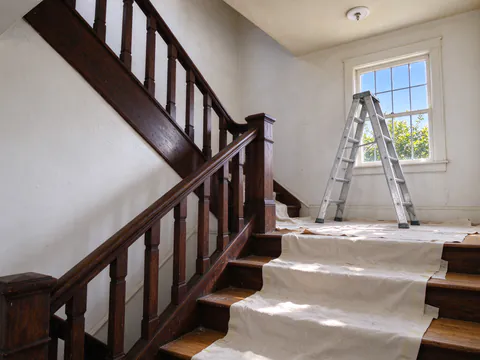
Second-floor units are different. In a two-story duplex, the upstairs unit is reached from the attic, and the floor between units is a closed cavity. Circuits that feed the upper unit’s walls from below sometimes have to pass through the lower unit’s walls or a shared chase, which is why the plaster wall rewiring plan for an upper unit can include openings in the unit beneath it.
Mapping and inspecting a building unit by unit
The first visit maps each unit and the shared service, and measures the attic and crawlspace. LADBS handles the permit, and city records show house rewires almost always go through as express permits, with no plan check. Inspections happen before walls close and at the end, unit by unit if the work is phased. What the inspector looks for is set out in the guide to LA rewiring permits, and the rewiring quote checklist lists what a multi-unit quote should separate.
Housing age varies within the area. In 90036, around the Miracle Mile, 35.7% of homes predate 1940; in 90035 only 25.7% do, so a knob and tube inspection settles what a given building has.
Nearby, Hancock Park and Windsor Square have larger single-family houses in HPOZs, West Adams and Jefferson Park have the city’s densest HPOZ cluster, and Silver Lake and Echo Park also have many small rental buildings.