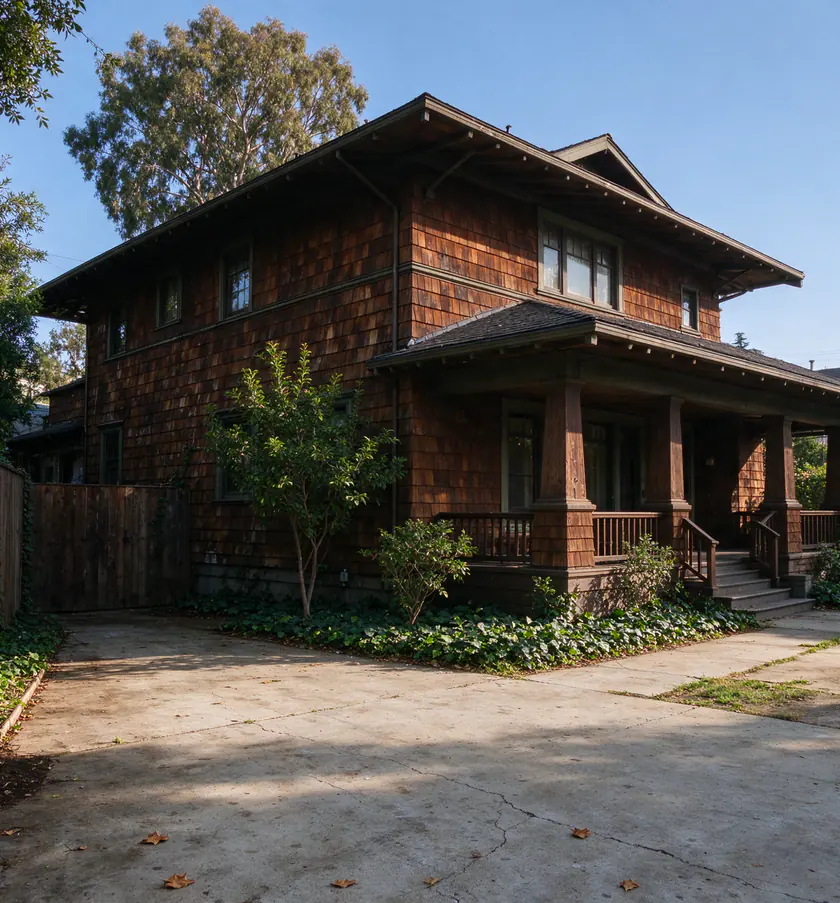
LA Knob and Tube replaces knob and tube wiring across West Adams, Jefferson Park, Harvard Heights, Adams-Normandie and University Park, where the city’s densest cluster of historic overlay zones sits on some of its oldest houses. Knob and tube replacement in West Adams usually means two finished floors, plaster on both, and a preservation plan to check before anything changes outside. In ZIP code 90018, the Census Bureau estimates 47.1% of housing units were built before 1940 and 58.1% before 1950.
Seven overlay zones, seven plans
City Planning lists seven completed Historic Preservation Overlay Zones in this cluster: Jefferson Park, West Adams Terrace, Harvard Heights, Adams-Normandie, La Fayette Square, University Park and Western Heights, with Pico-Union next door. No other part of Los Angeles packs that many into one area.
Each zone has its own preservation plan, and each plan lists its exemptions in its own section. City Planning materials state that interior work with no exterior change is exempt from review, so replacing wiring inside walls and ceilings normally needs no HPOZ approval. The exterior is another matter. A relocated service mast, a new meter or a panel moved to an outside wall is an exterior change, and most exterior changes in an HPOZ need a Planning approval before work starts. Because the plans are written zone by zone, the question to answer first is which plan covers the parcel, and then what that plan says about mechanical and electrical equipment.
Citywide, LADBS records show 295 of the 3,886 single-family rewire permits issued from January 2020 to October 2026 were on parcels zoned with an HPOZ suffix. A rewire inside an overlay zone is ordinary work; it simply has one more document to read. The historic homes guide covers approvals and the Mills Act.
Two-story Craftsman houses from the 1900s
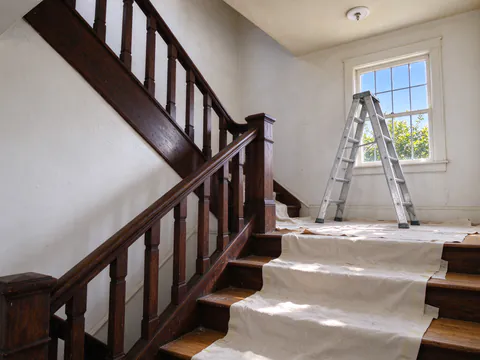
City Planning describes Harvard Heights as predominantly two-story Craftsman residences built between 1902 and 1908, and much of the surrounding area dates from the same early decades. Where a house has two full floors, the rewire becomes a routing problem with three layers: the attic, the floor between the stories, and the crawlspace.
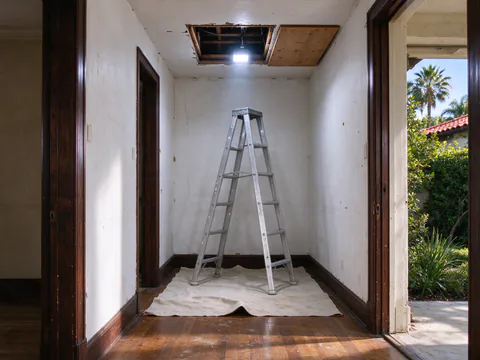
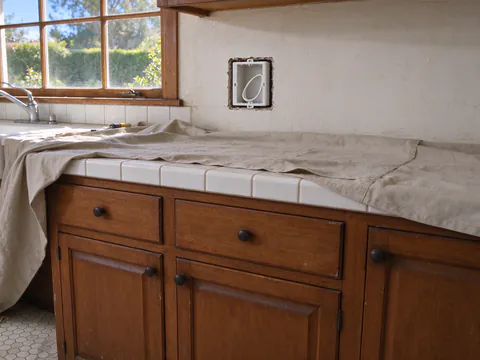
The attic is the easy path to the second floor. Upstairs ceiling fixtures and many upstairs outlets can be fed straight down from above. The crawlspace does the same for first-floor outlets. The hard layer is in the middle. The first-floor ceiling is closed above by the second-floor floor and below by finished plaster, so a new light or switch loop there has no open side to work from. Routes are found through closets, stacked walls that run from crawlspace to attic, and occasionally a chase hidden in a cabinet or pantry. Where none of those reach, a short opening in the ceiling plaster is made where framing has to be crossed, and it is listed on the quote along with who patches it.
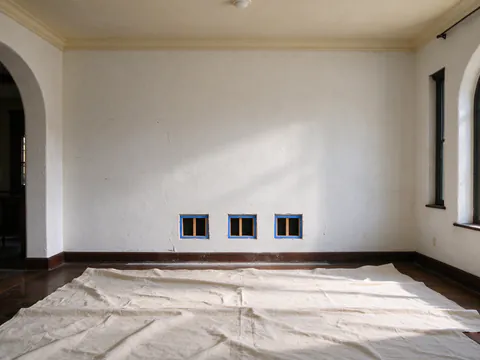
The plaster wall rewiring page explains how openings are placed in plaster and lath, and the whole-house rewiring page covers sequencing when every floor is involved.
How old the stock is, ZIP by ZIP
The three ZIP codes in this cluster differ more than the neighborhood names suggest.
| ZIP | Built before 1940 | Built before 1950 | Owner-occupied single-family, pre-1940 | LADBS single-family rewires, Jan 2020 to Oct 2026 | Cripple-wall retrofit permits, same window |
|---|---|---|---|---|---|
| 90018 | 47.1% | 58.1% | 3,270 | 85 | 221 |
| 90016 | 32.2% | 51.2% | 2,675 | 112 | 328 |
| 90007 | 35.0% | 41.6% | 766 | 36 | n/a |
Housing figures are Census Bureau estimates; permit figures are LADBS records. 90007 covers the area around USC, where far fewer old houses are owner-occupied, so a rewire there is more often a landlord’s decision. 90016 has more rewire permits than 90018 despite a lower pre-1940 share, and more retrofit permits too, which fits its large share of houses from the 1940s and the raised floors those retrofit permits imply. Across the wider West Adams-Baldwin Hills-Leimert plan area, LADBS issued 1,369 cripple-wall retrofit permits in the same window, second only to Northeast Los Angeles.
The 1940s question
More than half of 90018 and 90016 was built before 1950, which puts a lot of houses in the decade when residential wiring practice was changing. Year built is a starting point, not an answer: it is reported by owners and survey respondents, older dates are the least reliable, and a 1940s house can contain more than one wiring method. The identification guide explains what to look for from a safe distance, such as porcelain knobs on attic framing or separate single wires on tubes through joists, and why visible modern cable at a few outlets does not prove the original wiring is gone.
Insurance pressure in 90018
California FAIR Plan residential policies in 90018 reached 1,086 in September 2025, up from 977 four years earlier. That figure says many owners here are buying insurance outside the regular market; it does not say why, and nothing ties it to wiring specifically. Still, when a carrier’s questionnaire asks about wiring type, the answer has to be accurate. A rewire with a final LADBS inspection and a labeled panel gives an owner something concrete to show, and a partial job ends with a written list of what remains. Carriers set their own rules, so no particular result is assured. The insurance guide covers what underwriters may ask.
Running a rewire in a West Adams house
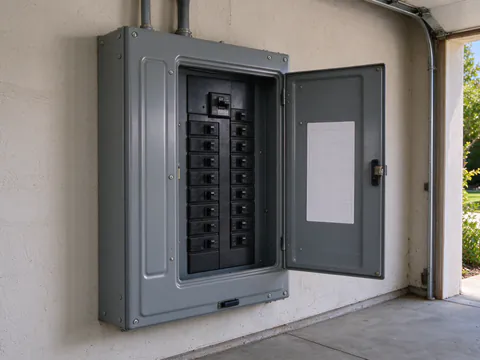
The first visit maps each circuit as live, dead or mixed, checks the panel, and measures attic and crawlspace access on both floors. A 2021 LADBS permit in 90018 simply reads “Update knob-and-tube electrical system to new wiring.” Only 96 LADBS electrical permits since 1996 name knob and tube outright, and 7 of them are in 90018, tied for the fourth most of any ZIP code; most rewire permits never say what they replaced. Behind a one-line description is a circuit-by-circuit plan that keeps most of the house powered most days. LADBS issues nearly all house rewire permits as express permits, with inspections before walls close and at the end. LADWP serves the area; a service change starts with LADWP verifying the meter location. The replacement process guide walks through each stage, and an inspection is the place to start when the extent is unknown.
Next door, Mid-City and Miracle Mile adds more overlay zones and duplexes, Leimert Park and Hyde Park shares the same plan area without an HPOZ layer, and Hancock Park and Windsor Square has larger houses under its own preservation plans.