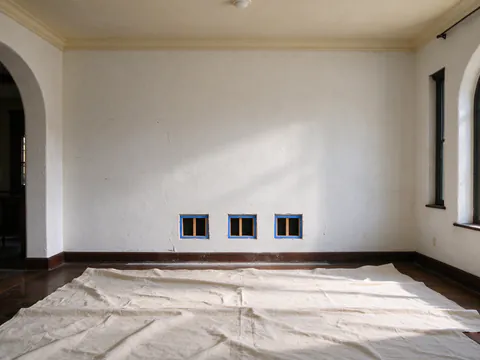
LA Knob and Tube plans rewiring in pre-war Los Angeles houses, where lead paint and asbestos during rewiring are part of the planning, not an afterthought. In a house built before 1978, painted plaster and trim may contain lead, and the EPA’s renovation rule governs how firms disturb it. Some older materials can contain asbestos, and South Coast AQMD Rule 1403 requires a survey before renovation, with limited exemptions. Both shape how and where openings are made.
None of this makes rewiring unusual or unsafe. It means openings are planned, tested where needed and contained, and that the quote says how.
Why rewiring touches these materials
A knob and tube replacement routes new cable through the attic and crawlspace wherever it can, but it still opens walls and ceilings at boxes and where a route crosses framing. Each opening cuts through paint, plaster and lath. In a pre-war house, that paint may include original lead-based layers under later coats. Old plaster, ceiling textures, and some older insulation and duct or pipe wrap in attics and crawlspaces can contain asbestos; only testing shows whether a given material does.
Lead paint: the EPA RRP rule
The EPA’s Renovation, Repair and Painting rule covers firms whose renovation, repair or painting disturbs lead-based paint in homes, child-care facilities and kindergartens built before 1978. Those firms must be certified by EPA or an authorized state and must use certified renovators, who follow lead-safe work practices.
The six-square-foot exemption
EPA exempts minor repair and maintenance that disturbs six square feet or less of painted surface per room inside, or 20 square feet or less outside. A single outlet-box opening is small. A room with several openings, or one longer channel along a wall, can pass that threshold, and the count is per room, not per opening. Planning the openings is therefore also planning the lead work.
Testing and documentation
The rule applies unless there is documentation that the paint is not lead-based. A certified renovator can test components with an EPA-recognized test kit, or the paint can be tested by other recognized methods. Without that documentation, the work is treated as if lead is present.
What lead-safe work looks like
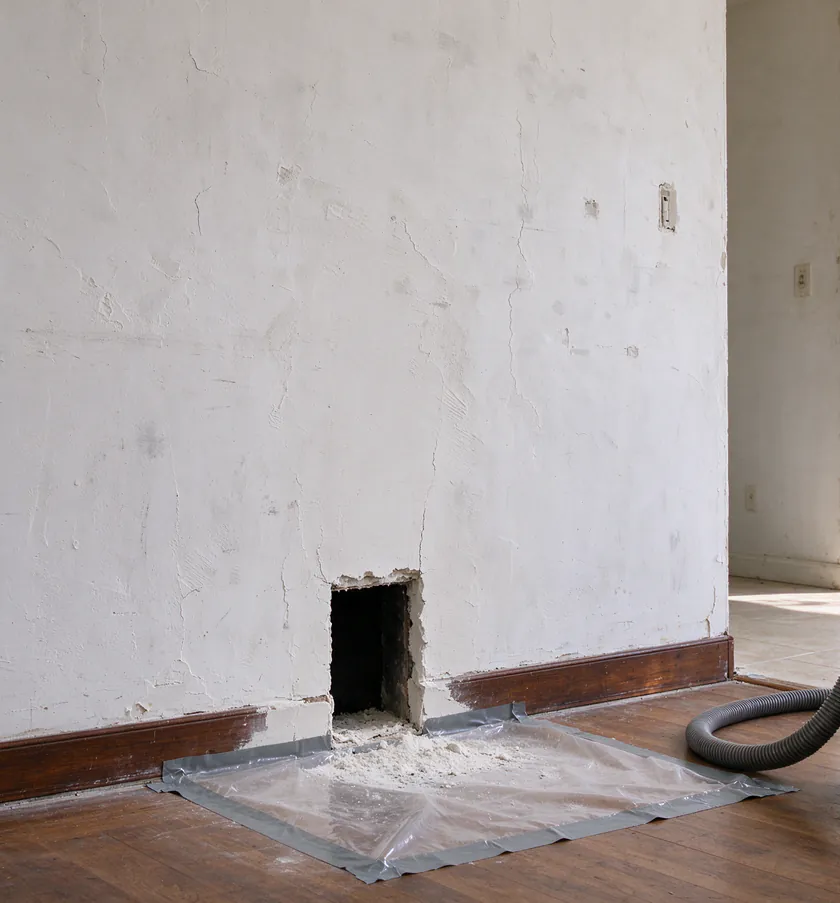
In practice, lead-safe work means containing the area around the opening with plastic sheeting, cutting with dust collection rather than dry sanding, keeping occupants and pets out of the work area, and cleaning thoroughly before the containment comes down. It adds time to each opening, which is one reason the plaster wall rewiring approach keeps openings few and small.
Asbestos: South Coast AQMD Rule 1403
South Coast AQMD Rule 1403 covers asbestos during renovation and demolition across the Los Angeles area, including the City of LA, Pasadena, Glendale and South Pasadena. It requires an asbestos survey by a certified consultant before renovation.
The rule lists exemptions. One is for an owner-occupant personally renovating their own single-unit dwelling; work carried out by a contractor is not owner-occupant work. Another covers houses where less than 100 square feet of intact material is removed. Whether an exemption fits a particular job depends on the materials and the amount disturbed, which is a question for the contractor and, where needed, a certified asbestos consultant, before cutting starts.
What this means for each opening
The two rules push in the same direction: fewer openings, smaller openings, and openings planned before the first cut.
- Plan the openings first. The circuit map and routing plan set where each opening goes. That list is what lets anyone judge how much paint and plaster will be disturbed in each room.
- Test before cutting. Where documentation is missing, test the paint and, if a survey is needed, the plaster or texture, so the result is known before the schedule is fixed.
- Contain and clean. Each opening is set up, cut, wired, inspected and closed with containment in place.
- Patch with the same care. Sanding a patch on painted plaster disturbs paint too.
The replacement process guide shows where openings fall in the sequence, and living at home during a rewire covers protection for an occupied house.
The attic and crawlspace
Most new cable runs through the attic and crawlspace, which is good news for paint, but those spaces have their own materials. Older loose-fill insulation, duct wrap and pipe insulation can contain asbestos. If old insulation has to be moved or removed to reach knob and tube, it should be identified first. The attic insulation page covers the wiring side of that work.
Cost and schedule effects
Testing, containment, lead-safe cleanup and any abatement take time and add cost. They are part of why plaster restoration has no single published price; the Los Angeles cost guide explains how patching is priced. A quote for a pre-1978 house should say how painted surfaces are handled and whether asbestos testing is expected, which is on the rewiring quote checklist.
What owners should not do
Do not sand, scrape or cut painted plaster to check what is underneath, and do not disturb old insulation in the attic or crawlspace. Do not sweep plaster dust or use a household vacuum on it. If you have documentation that your paint was tested, keep it with the house records. In a historic house, these rules sit alongside preservation care for original finishes, which the historic homes guide covers. When you want openings planned with lead and asbestos in mind, call or request an estimate.